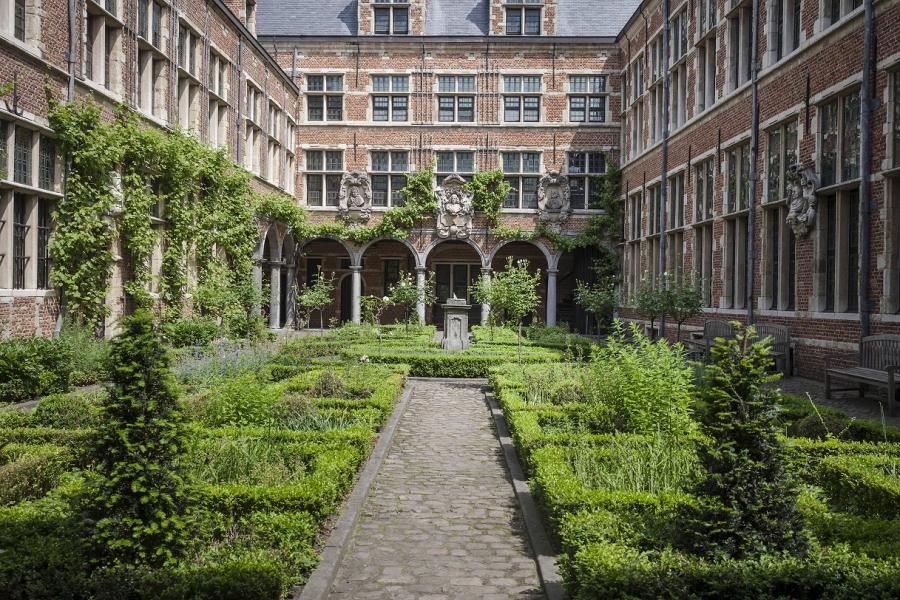
The garden
Want to escape the hustle and bustle of the city? Take refuge in the historic courtyard garden of the Plantin-Moretus Museum. An oasis of calm in the heart of Antwerp.
Step inside the 16th-century printing office and you’ll quickly discover that printing requires real craftsmanship. Explore the oldest printing presses in the world and try it for yourself.
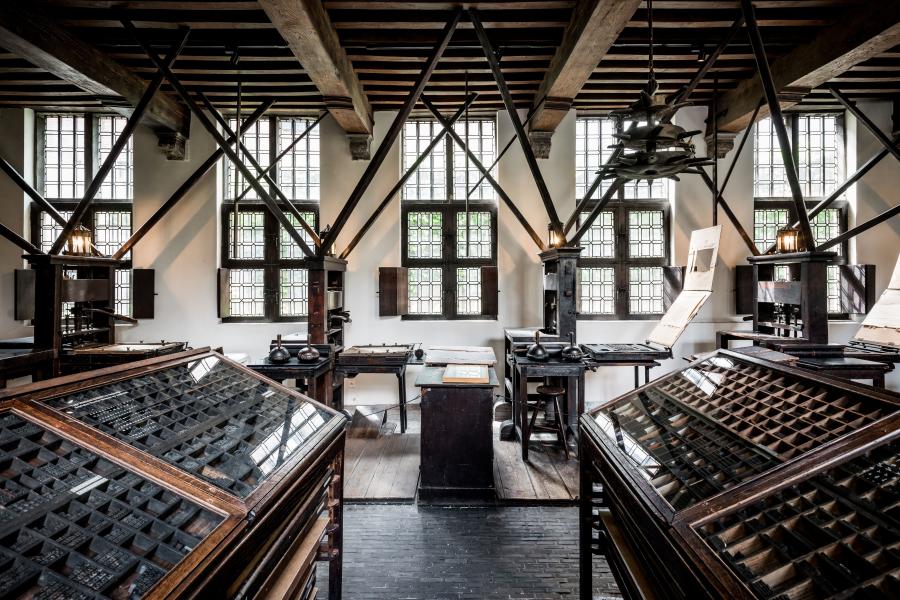
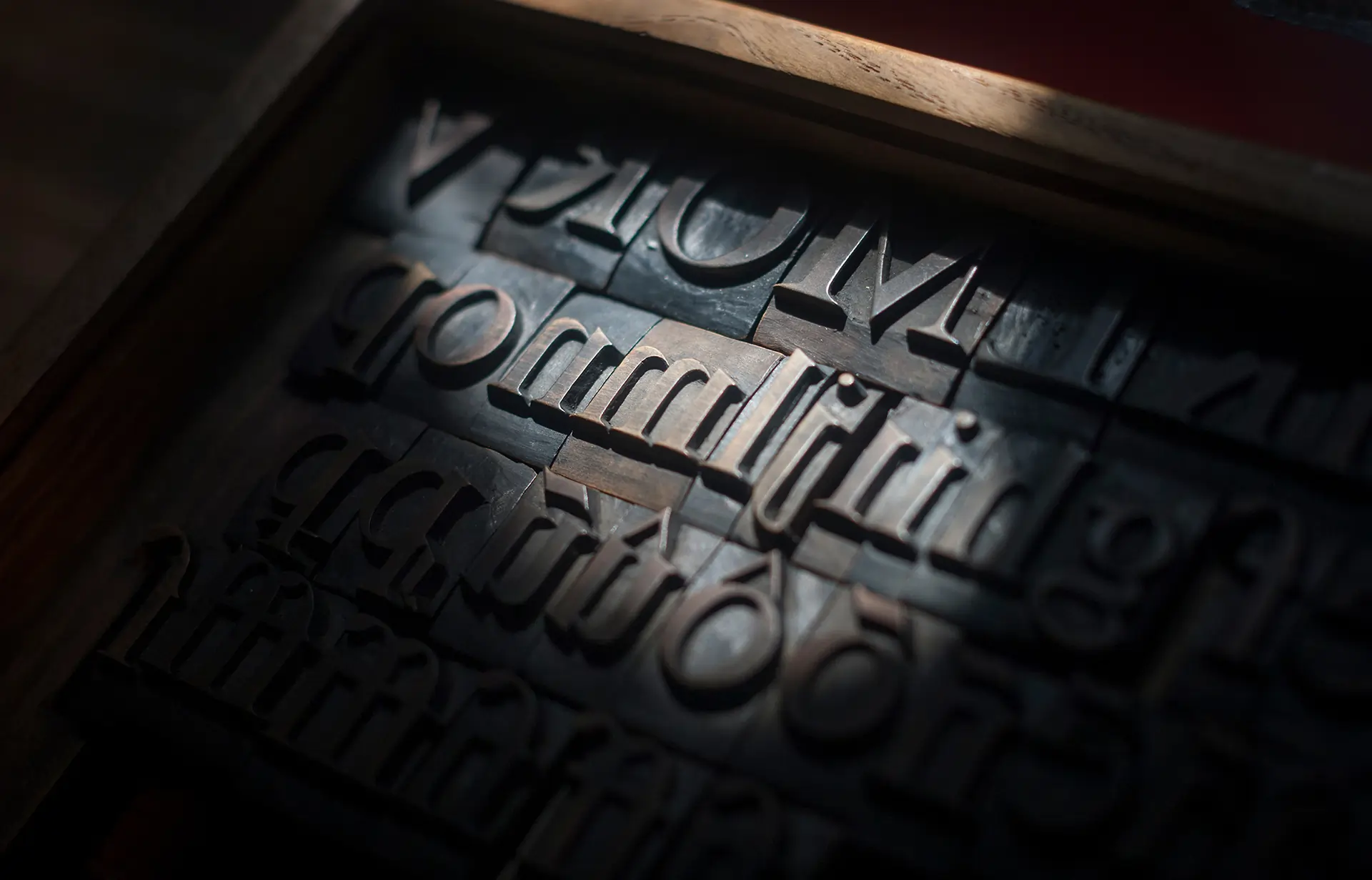
Ever wondered how these century-old books were made? There’s no better place to learn than the Plantin-Moretus family’s 16th-century printing office. This is no replica, but the actual workshop that was used continuously for over 300 years. It’s almost as if the workers just left for the day, work tools set down and printing presses in place. View them, touch them, and marvel at the art of printing.
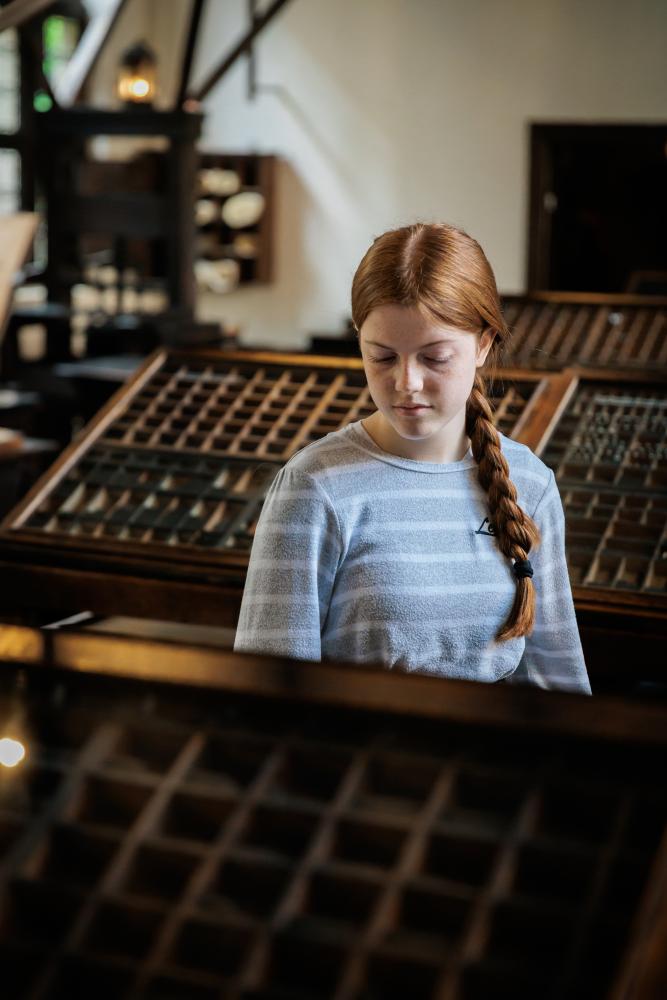
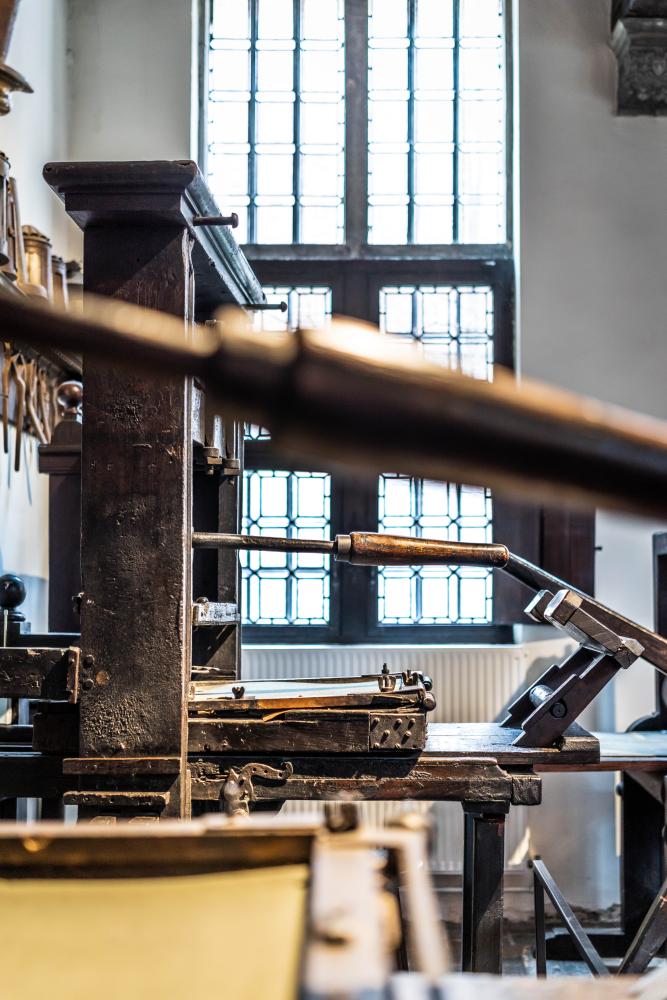
Typesetters set lead letters, printers operated the presses, and proofreaders dotted the i’s and crossed the t’s. In its heyday, the Officina Plantiniana employed more than 60 workers – and six of the eight remaining presses are still functional to this day. The other two date back to the 17th century, making them the oldest wooden printing presses in the world. Now that’s impressive!
The only indication that the printing office is no longer in use is the absence of the Moretuses. But during your visit, volunteers will provide live demonstrations on a replica press, perfectly modelled after the 16th-century ones. Watching the printing office come back to life is a definite highlight of your visit.
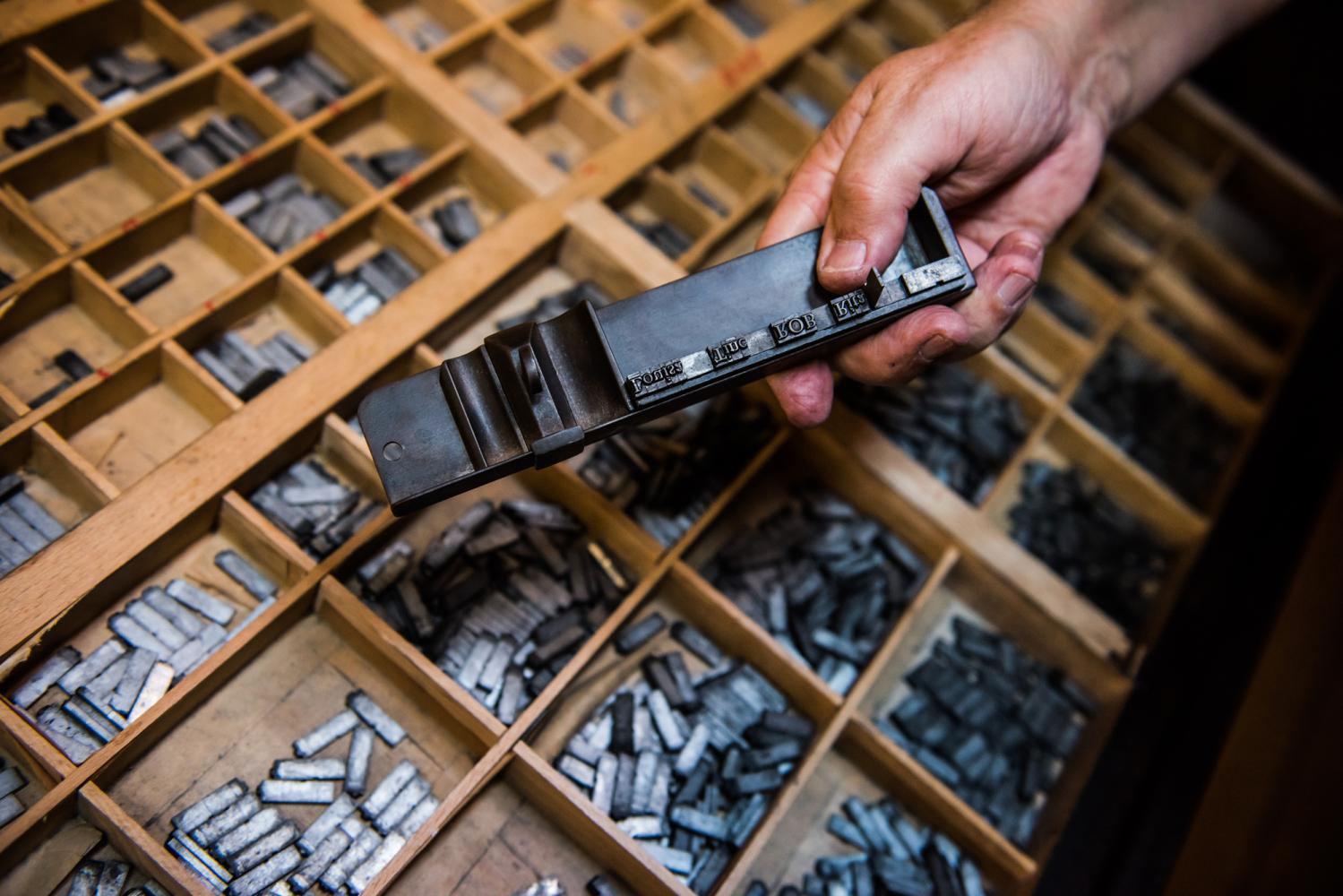
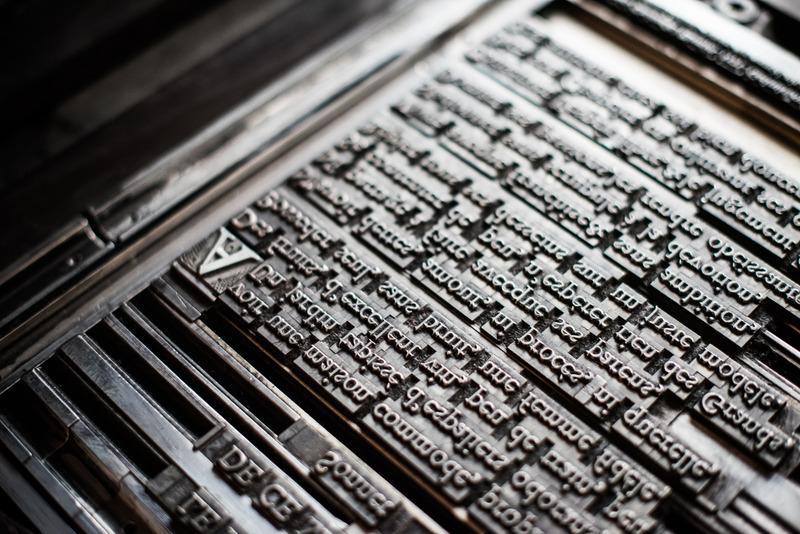
Ready to step back in time? Witness a well-oiled machine in the works at the printing office. The typesetter selects lead letters from the letter cases, neatly organized by alphabet and size. With a composing stick, he’ll create lines which are then assembled into columns or pages on the galley, a wooden board. He collects several pages in a typeset, which is then placed on a mould in the press.
This is where the printer and his assistant take over. They use inking balls to cover the clamped typeset with ink. They then fasten moistened paper into a special construction and press it against the typeset in one swift movement. With a thorough check and after making the necessary adjustments to the first proof, the proofreaders approve the print. Production is now in full swing.
Did you know…
That one single press printed up to 1,250 double-sided sheets of paper every day? That’s 2,500 sheets, front and back. Each side needed to go through the printing press twice, which meant a printer had to perform 5,000 operations per day. Who knew making books was such a workout?