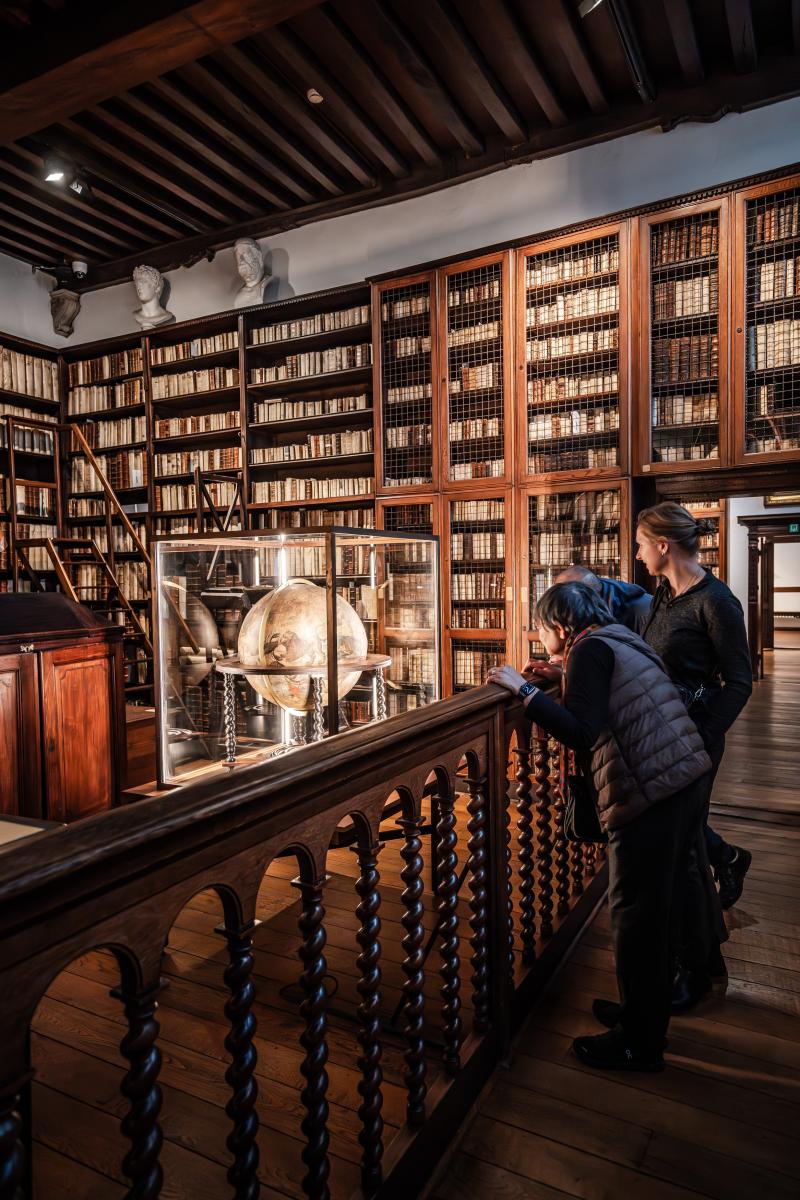
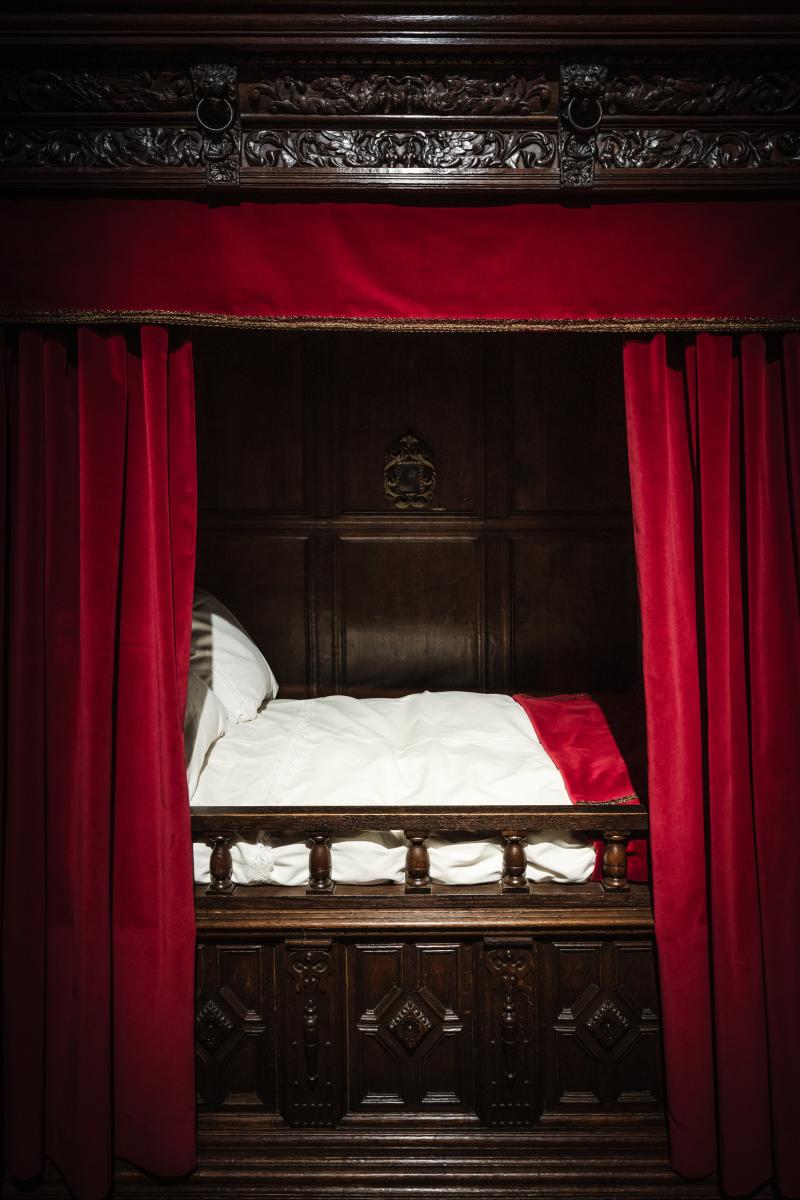
The living quarters
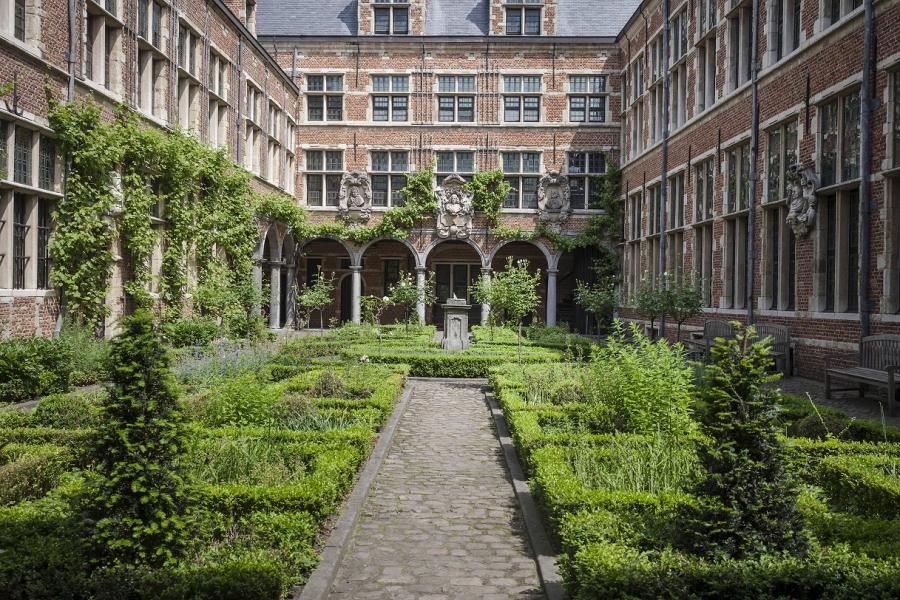
Gold and Rubens on the walls, and valuable furniture and objects in every corner. Each generation of this wealthy entrepreneurial family added personality and a touch of grandeur. Centuries-old luxury with timeless class.
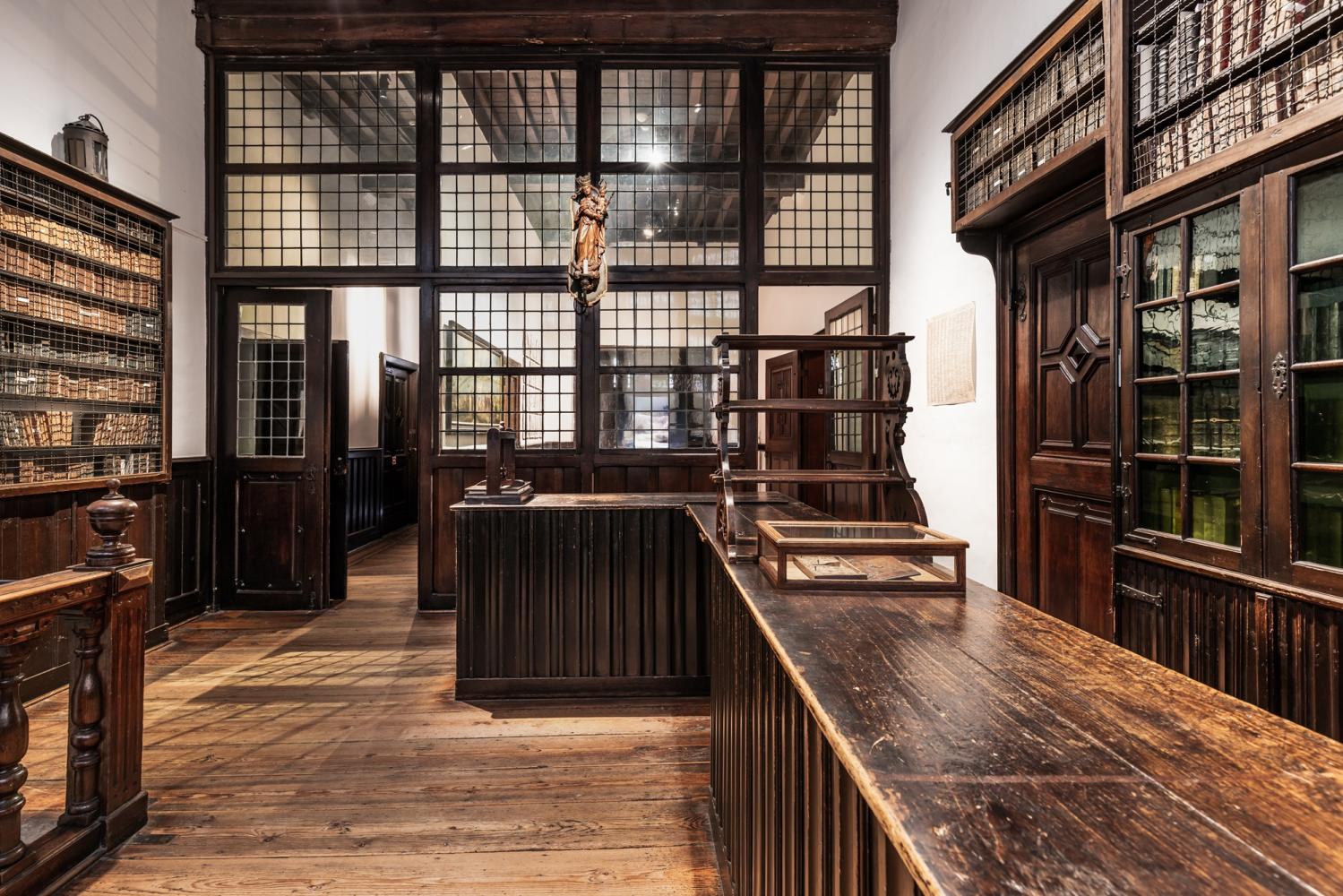
The Plantin-Moretus family opened several bookshops to sell their wares – including one located within the printing house. Can you picture it? No need: the bookshop is still there, so you can easily have a look during your visit. Everything is perfectly preserved, from the interior to the materials and the atmosphere.
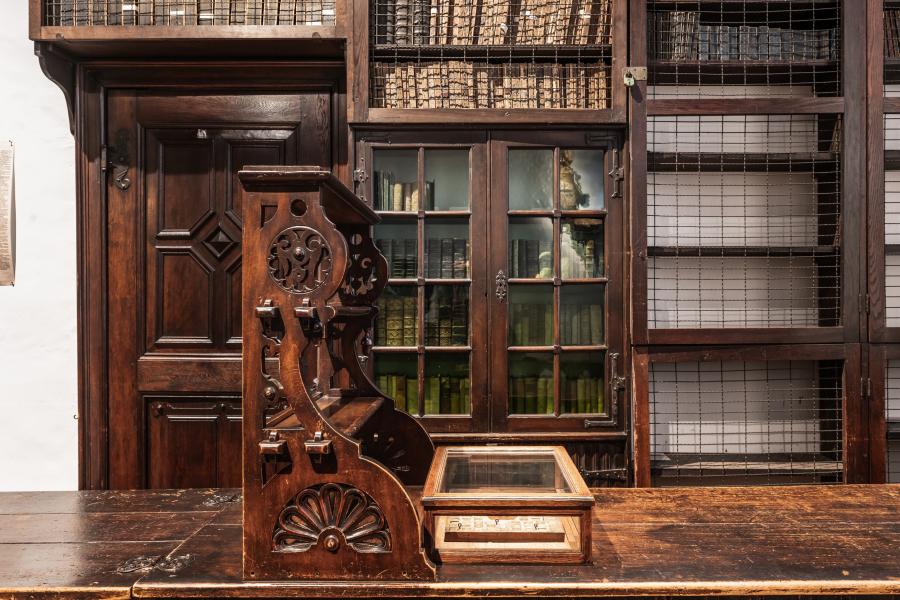
Is it truly authentic? Or is it a 19th-century reconstruction? Opinions are divided. One thing is certain: this shop is exactly how the Plantin-Moretus family devised it – from the tall cabinets and counters down to the money scales to verify silver and gold coins.
The shop likely moved from the West wing around 1700, where the proofreader’s room is located. Customers no longer had to pass through to the courtyard to access it, but were instead attracted by the tempting shop window to browse and buy titles.
Production, sales, and marketing all happened under one roof. That made things particularly useful for merchants from all over Europe to buy goods for further distribution – whether in loose sheets or bound. The company set up its own international network through the Frankfurter Buchmesse. The collection on offer was significant, both in terms of themes and languages.
Not everything was for sale, though. In 1570, Plantin printed the Index Librorum Prohibitorum on behalf of the Duke of Alva: a list of banned books, including some of his own publications. Plantin was daring enough to print both Catholic and Protestant works, a risky strategy that rewarded him with both prestige and suspicion.