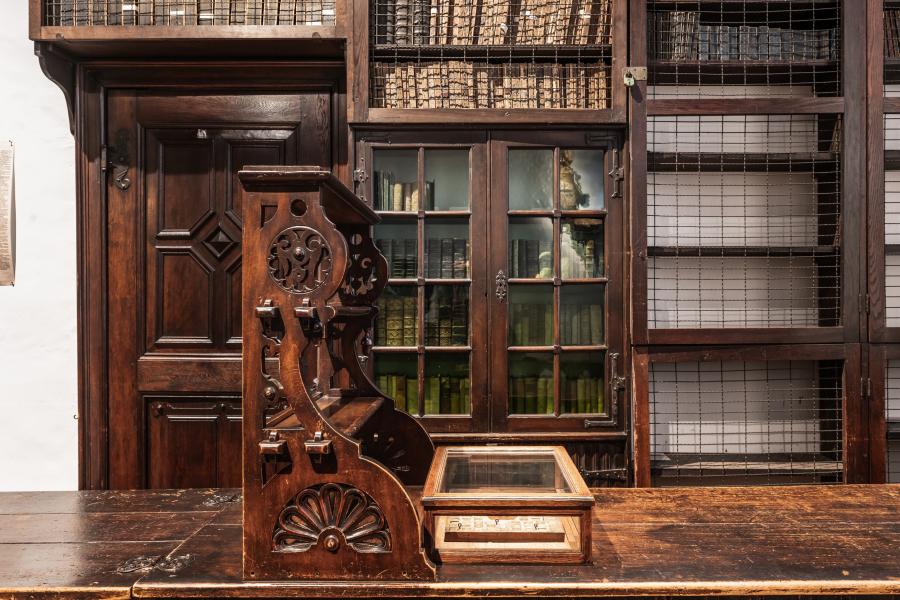
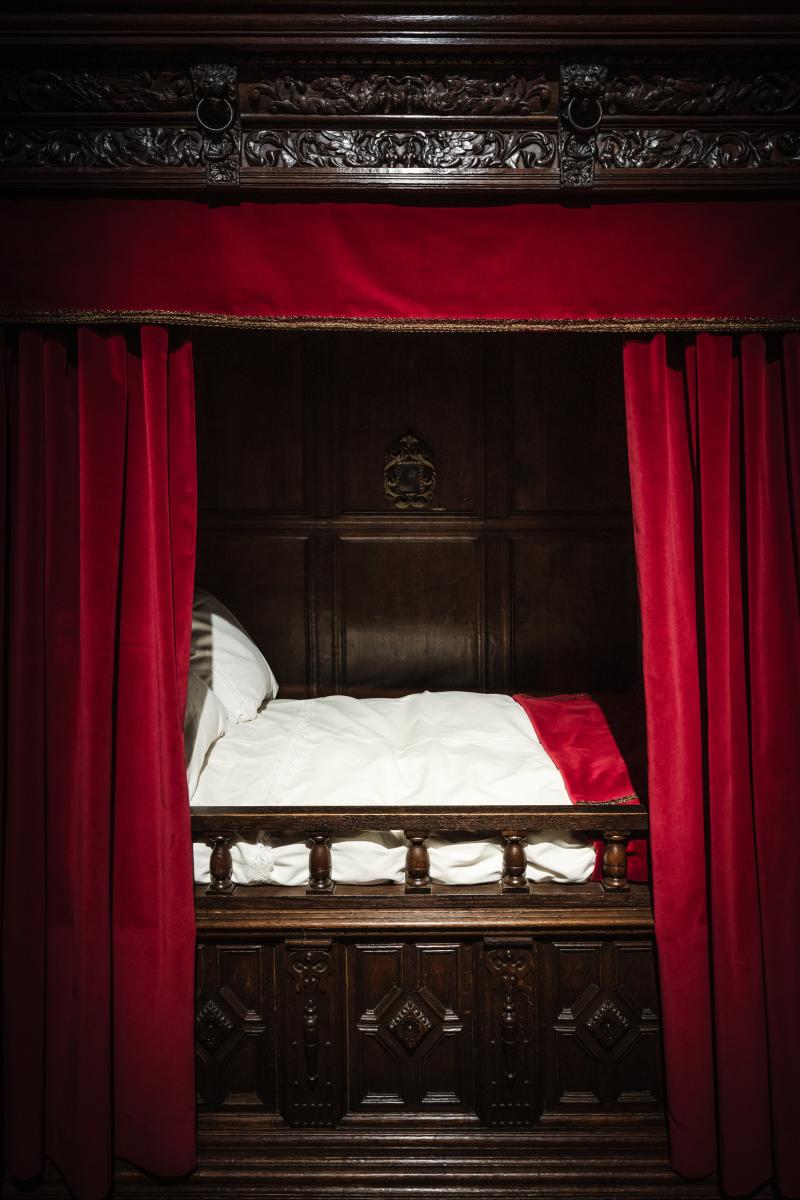
The living quarters
Gold and Rubens on the walls, and valuable furniture and objects in every corner. Each generation of this wealthy entrepreneurial family added personality and a touch of grandeur. Centuries-old luxury with timeless class.
Christoffel Plantin passed on his love for the written word to his descendants and successors. All their books are neatly displayed in the large 17th-century private library. An inspiring place, with towering shelves filled with old yet remarkably well-preserved prints. Sources of knowledge, then and now.
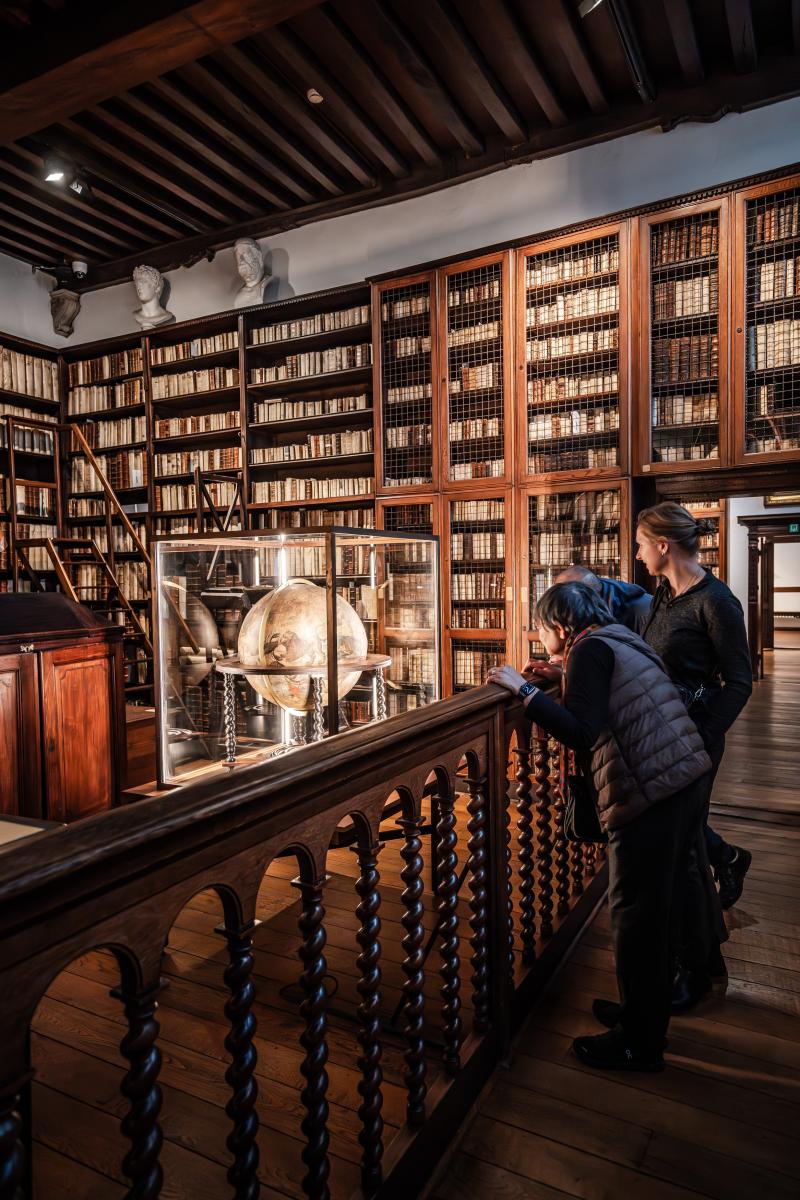
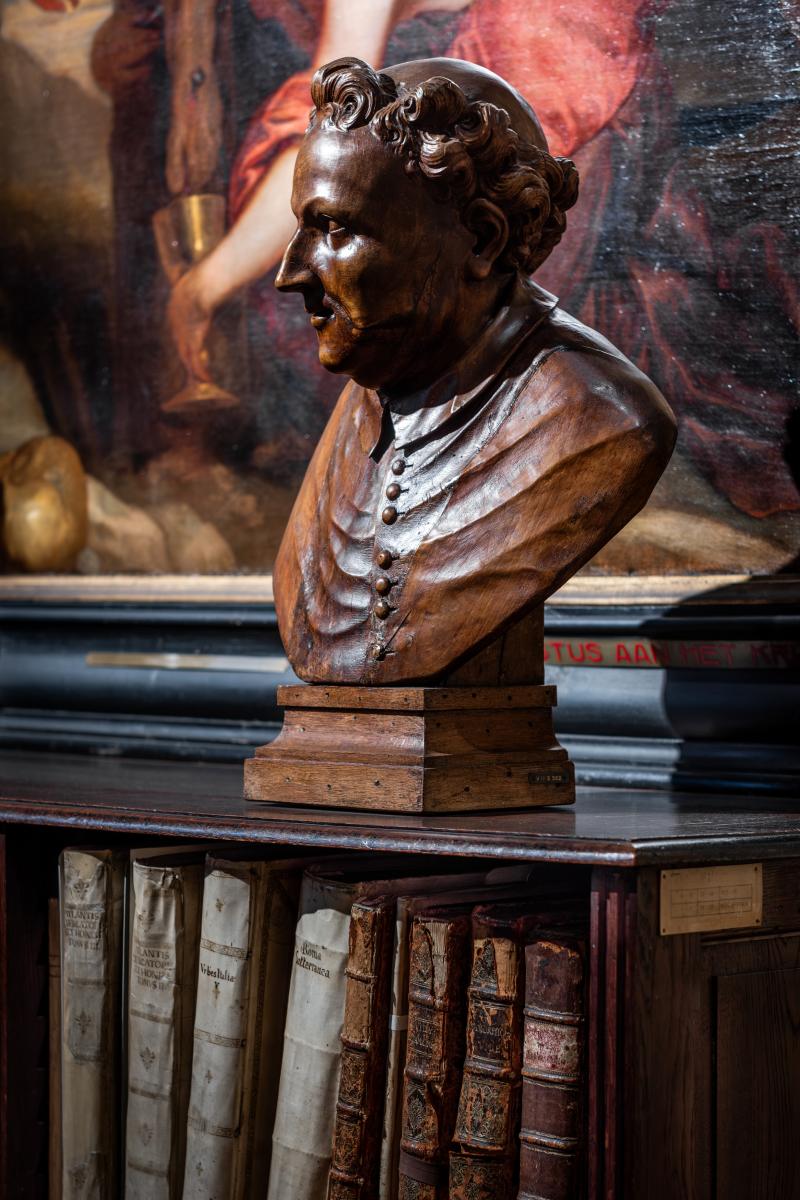
Modestly put, this is the best-preserved printing library in the world. Books arranged by size, showcasing their expert craftsmanship. As soon as you step inside, you are surrounded by sturdy, floor-to-ceiling cabinets carrying vast amounts of knowledge. Wooden busts on the lecterns represent saints and popes, whereas the plaster counterparts on the shelves depict Greek and Roman princes and scholars. Do you recognise anyone?
As revealed by the altar and crucifixion painting, this space once served as a private chapel. Mass was held at the start of every working day. But its original purpose was the Officina’s work library. Plantin stored books that aided the daily operations of the printing house and its proofreaders. In preparation for his own publications, he purchased medieval manuscripts, first-century printing works, and contemporary publications by competitors and acquaintances.
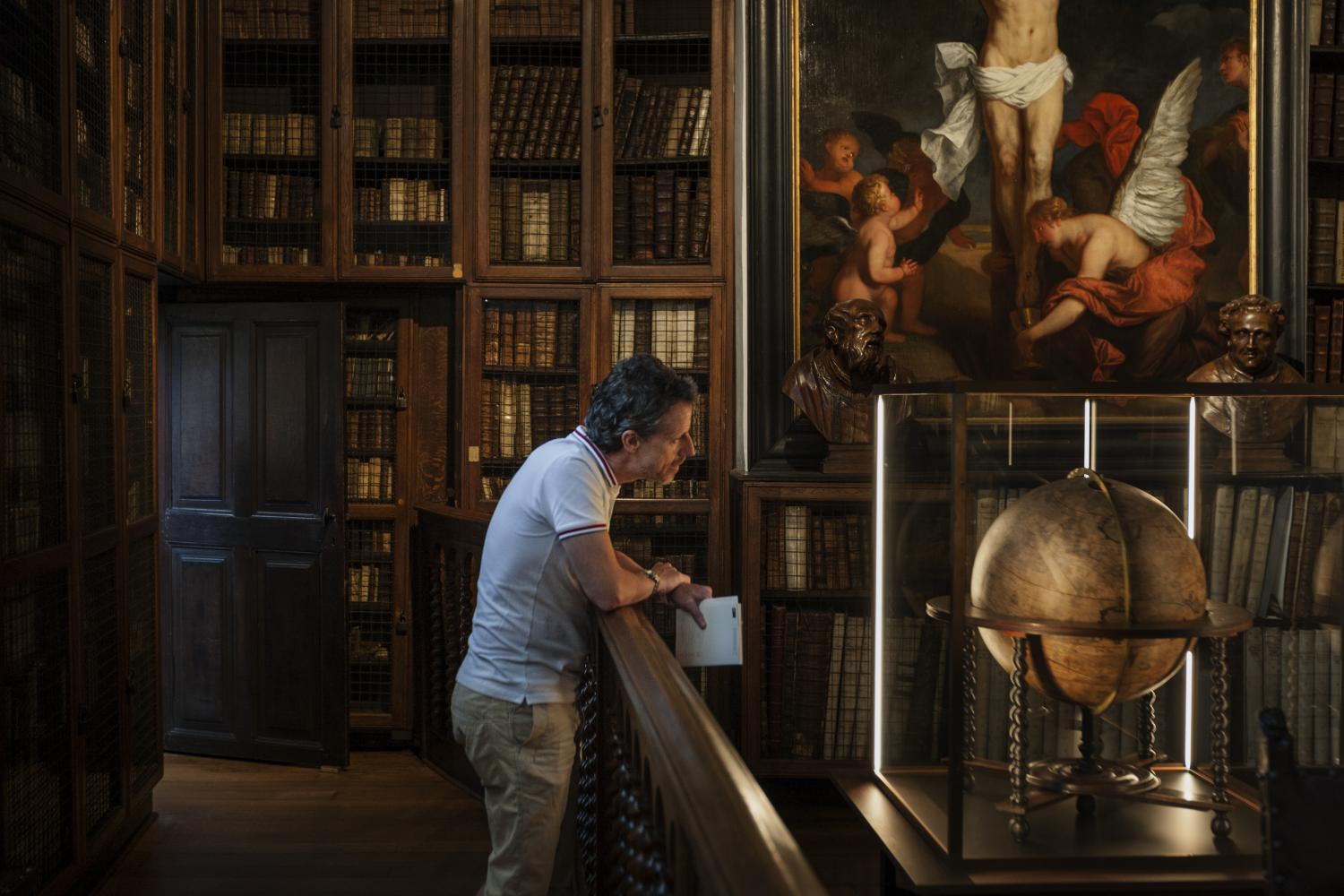
Together with the storage rooms and small library, the museum collection comprises no fewer than 40,000 books and 69,000 individual prints. And it’s not only thanks to an inquisitive Plantin and the bibliophile Balthasar I Moretus, as their successors continued to expand the collection. When the Officina Plantiniana reopened as the Plantin-Moretus Museum, its first curator, Max Rooses, purchased various 16th-century works from other Antwerp publishers in addition to original prints. As a result, the large library remains up and running to date, accommodating research requests from academics and historians worldwide.
Christoffel Plantin passed on his love for the written word to his descendants and successors. All their books are neatly displayed in the large 17th-century private library. An inspiring place, with towering shelves filled with old yet well-preserved prints. Sources of knowledge, then and now.