The Historical House
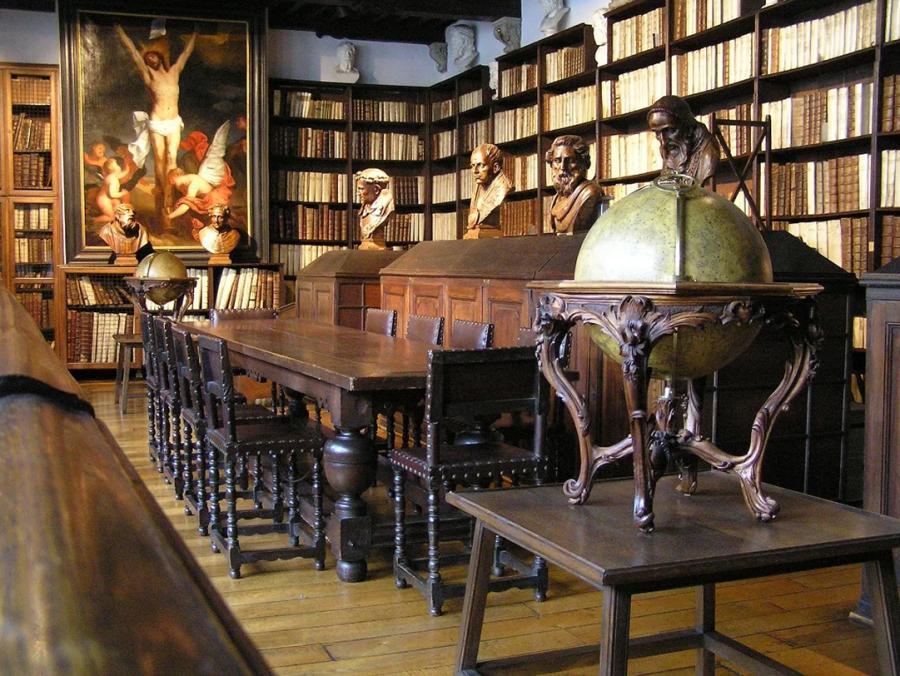
16th-century European culture, intellect, and family life all come together in this beautiful patrician residence at Vrijdagmarkt 22. An unparalleled collection of paintings, sculptures, tapestries, furniture, and artefacts illustrates the rich history of this notable printing dynasty. It’s no wonder that this historical house and the family business are both listed on the prestigious UNESCO World Heritage List.
A Historical Site and Building
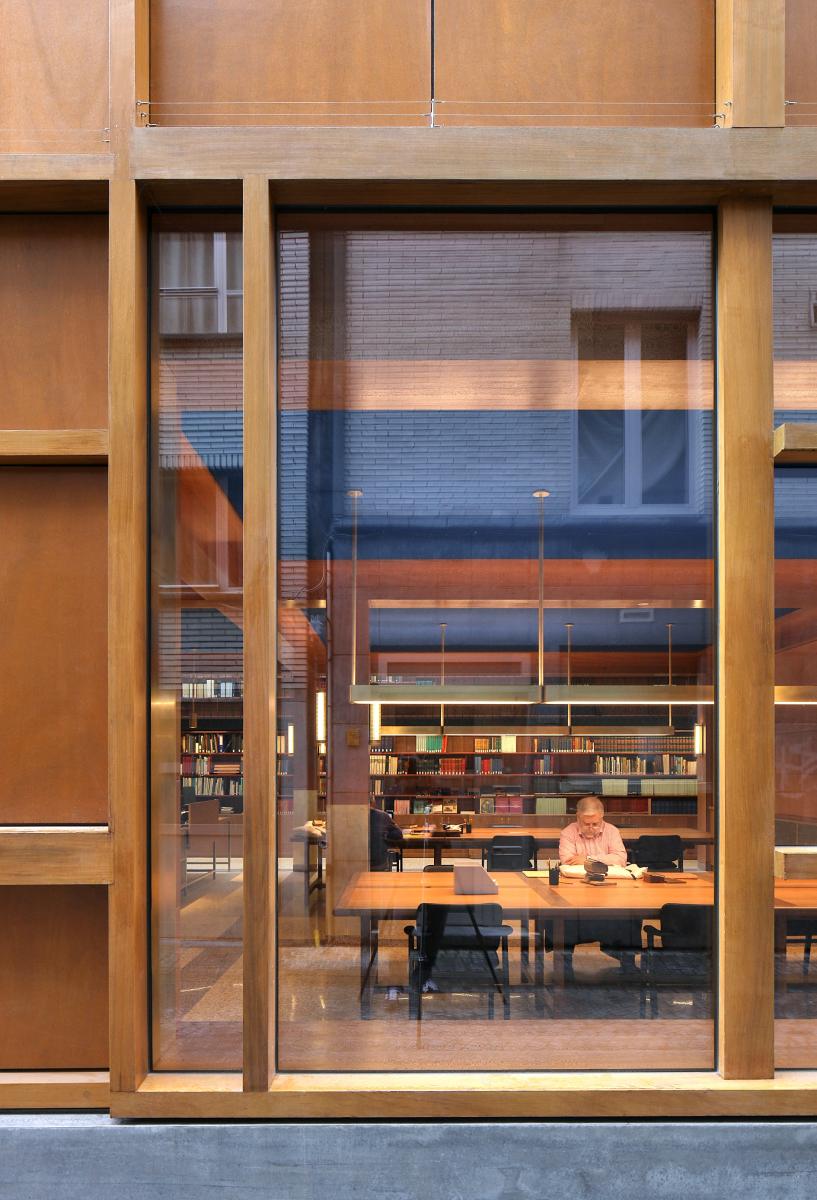
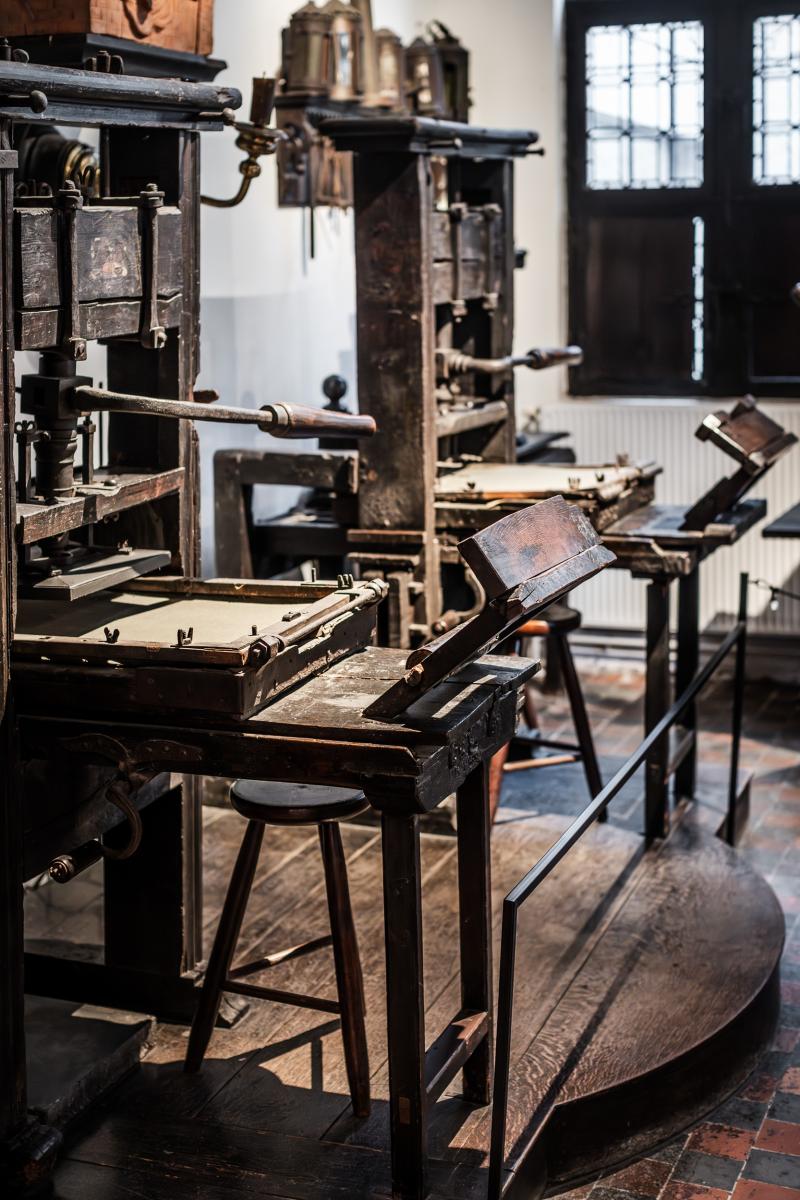
A “large house with gate, gallery, yard, tower, parlour, kitchen…” as quoted in historical documents. In 1576, Christophe Plantin signed the deed of sale for a property on the Vrijdagmarkt and renamed it as De Gulden Passer (the Golden Compass). It was an ideal estate with a spacious garden, a coach house facing the Heilige Geeststraat, and an impressive printing office with room for sixteen printing presses. The complex expanded throughout the 17th century, with Jan I and especially Balthasar I Moretus adding extra residences, workspaces, and a state-of-the-art library. The shop was also housed in De Gulden Passer around 1700.
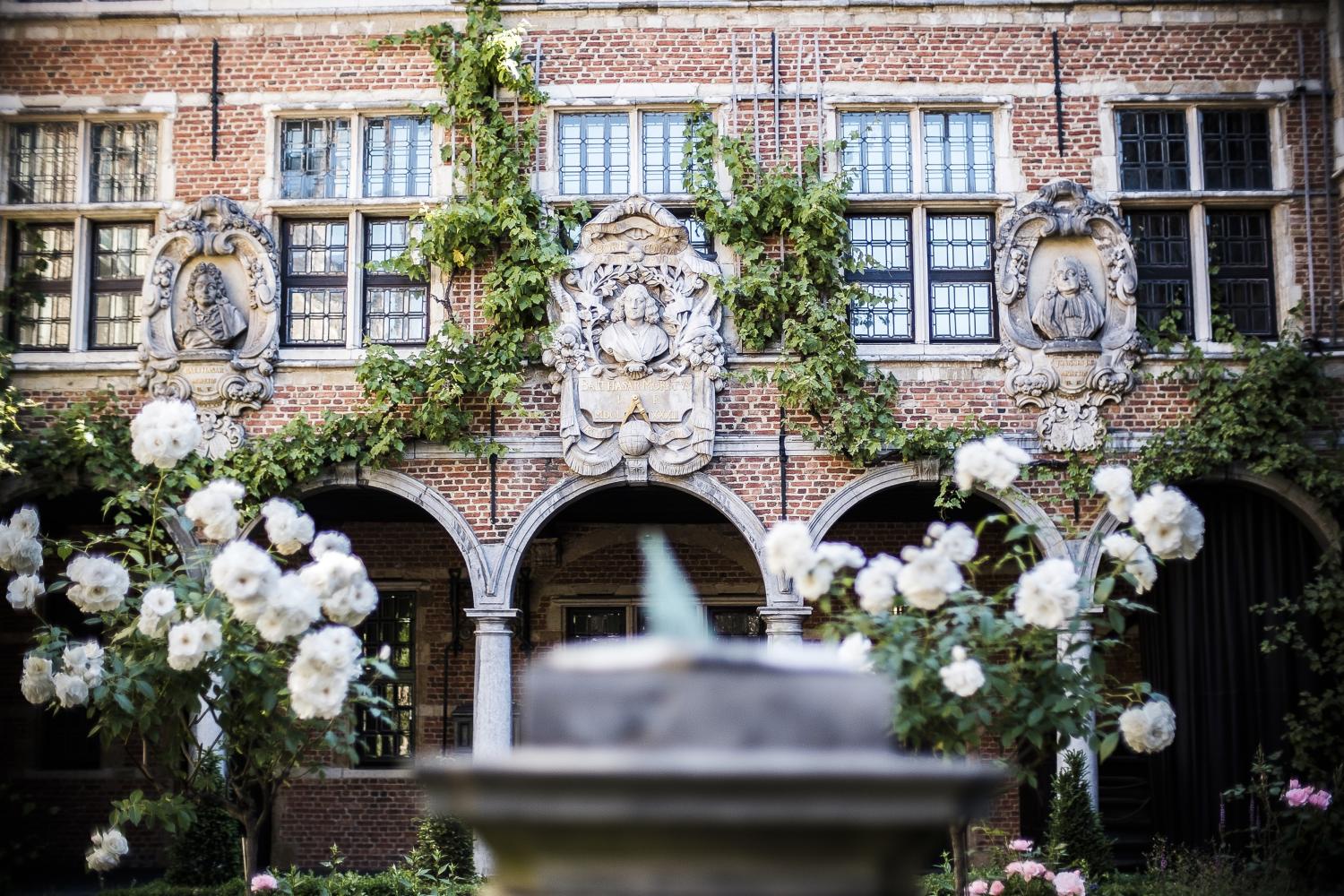
In the 18th century, Franciscus Joannes Moretus gave the site its current classical façade. The buildings facing the courtyard were connected, becoming a unified architectural complex, and De Gulden Passer grew into a unique city palace, where life, business, and art seamlessly overlapped. This historical treasure has been open to the public since the Plantin-Moretus Museum opened in 1877.
Paintings
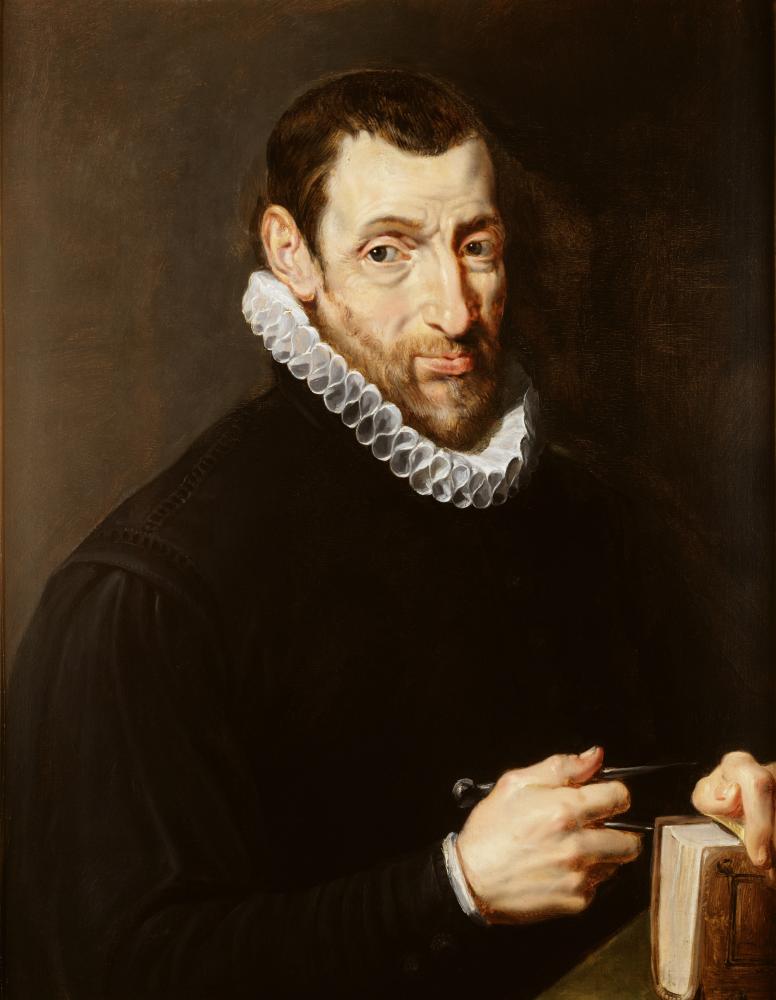
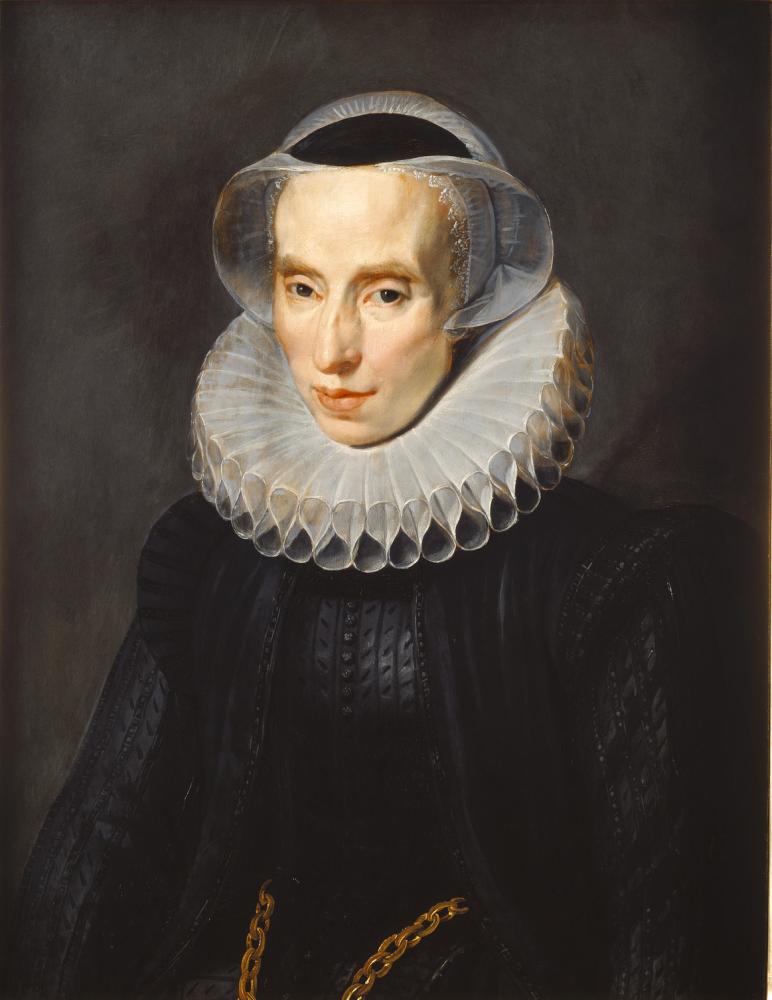
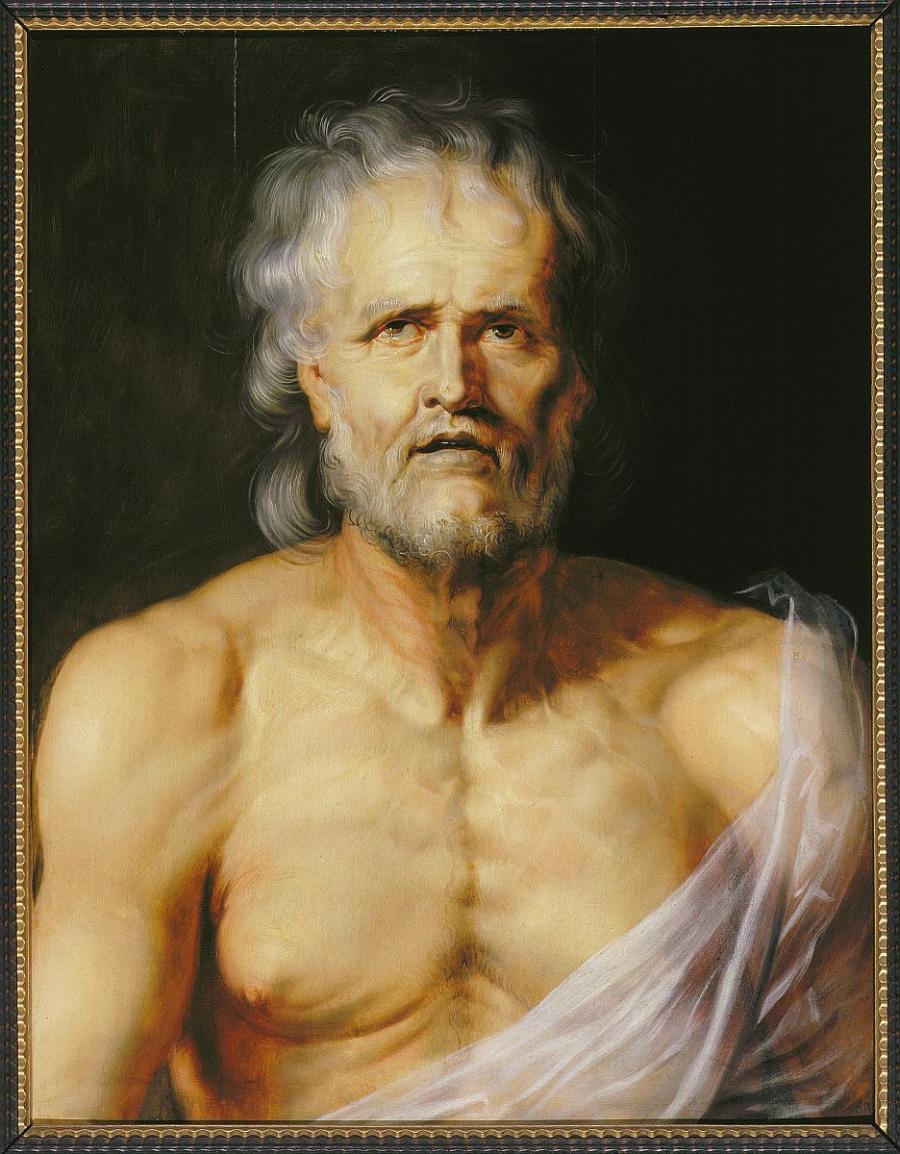
It’s OK to stop counting – there are no fewer than 153 paintings in the house. That includes up to 71 portraits of prominent family members and friends. If you look closely, you might recognise the humanist Justus Lipsius and the cartographer Ortelius. A signature isn’t always present, but the style is unmistakable: none other than Peter Paul Rubens skilfully painted several illustrious family members. On commission, he immortalised Jan I Moretus and Martina Plantin, as well as Christophe Plantin and Jeanne Rivière, the parents and grandparents of his good friend Balthasar I Moretus.
The family considered their artworks to be treasures and treated them accordingly. Whenever the estate was inherited, these always remained in the hands of the new company owner. As a result, this exceptional collection has remained intact to this day.
Sculptures
Art enthusiast Baltasar I also commissioned sculptures to further embellish the residence and garden, requesting works from Hans van Mildert, among others. The garden features his sculptures depicting various printing masters and, once again, family friend Justus Lipsius. In the letter room, he carved out Honor, Virtus, and Doctrina: three stone representations of honour, virtue, and knowledge based on drawings by Rubens.
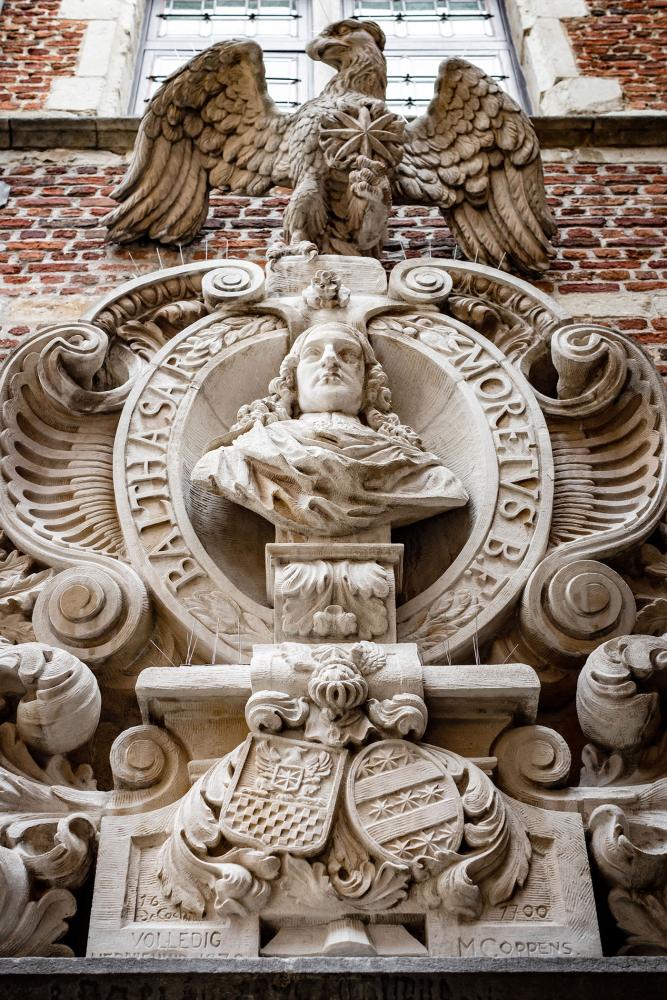
Artus I Quellien sculpted the bas-relief and logo above the entrance gate. Pauwel Dierickx, in turn, was responsible for the lion on the courtyard garden steps, as well as several elegant doorframes. The generations after Balthasar I continued to build upon this artistic legacy, including the Apollo by Gilles-Lambert Godecharles in the entrance hall and the lime wood sculptures in the library.
Furnishings
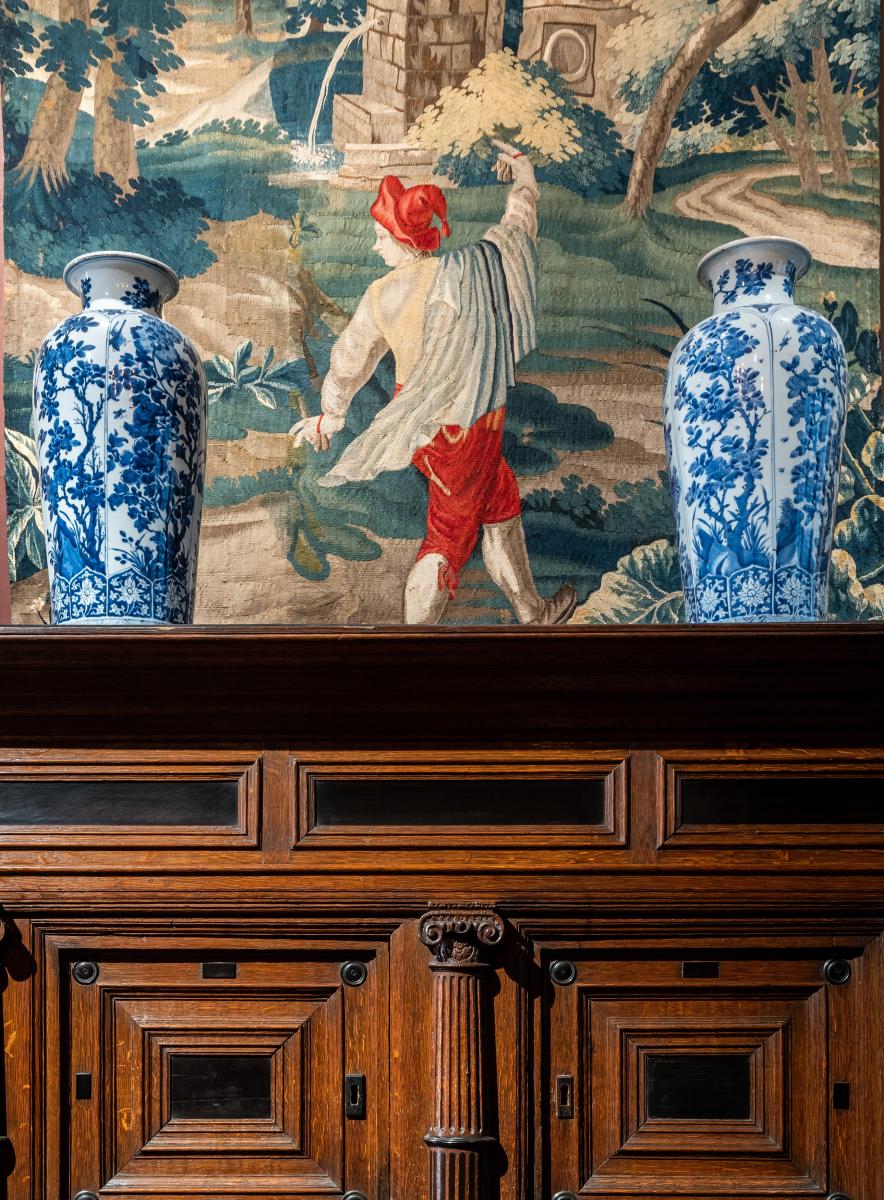
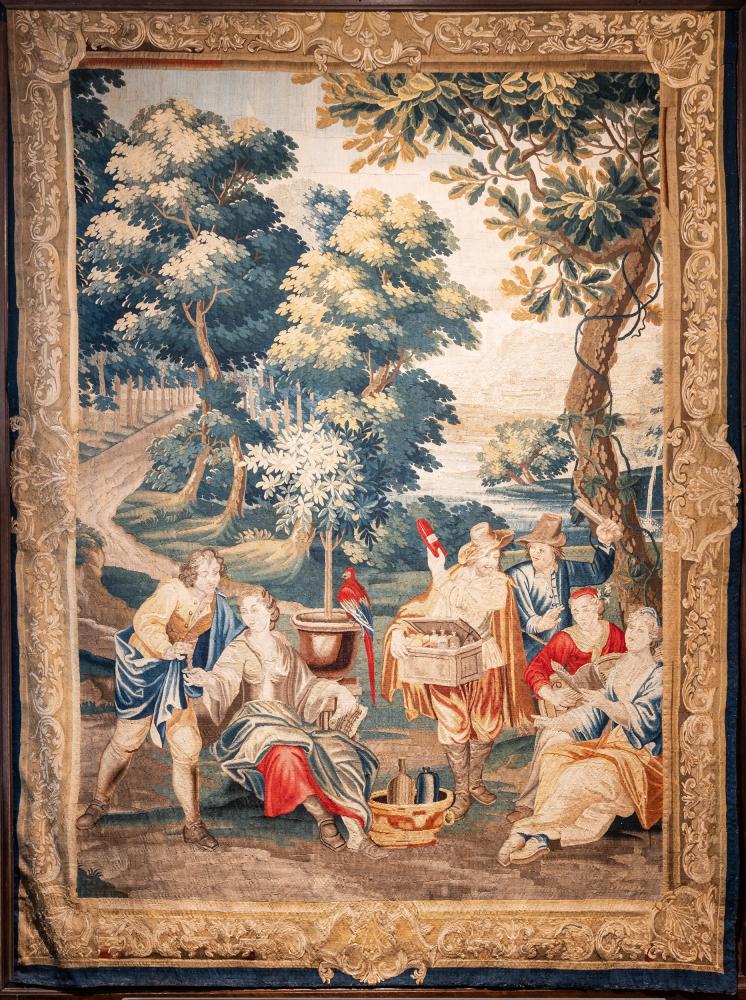
Back then, anyone who covered their walls with sophisticated wall decorations had truly made it in life. Although most of it is now gone, the collection of gold leather from the 16th, 17th, and 18th centuries still captures the imagination. As an extra status symbol, the Plantin-Moretus family even incorporated their logo into one of the many tapestries.
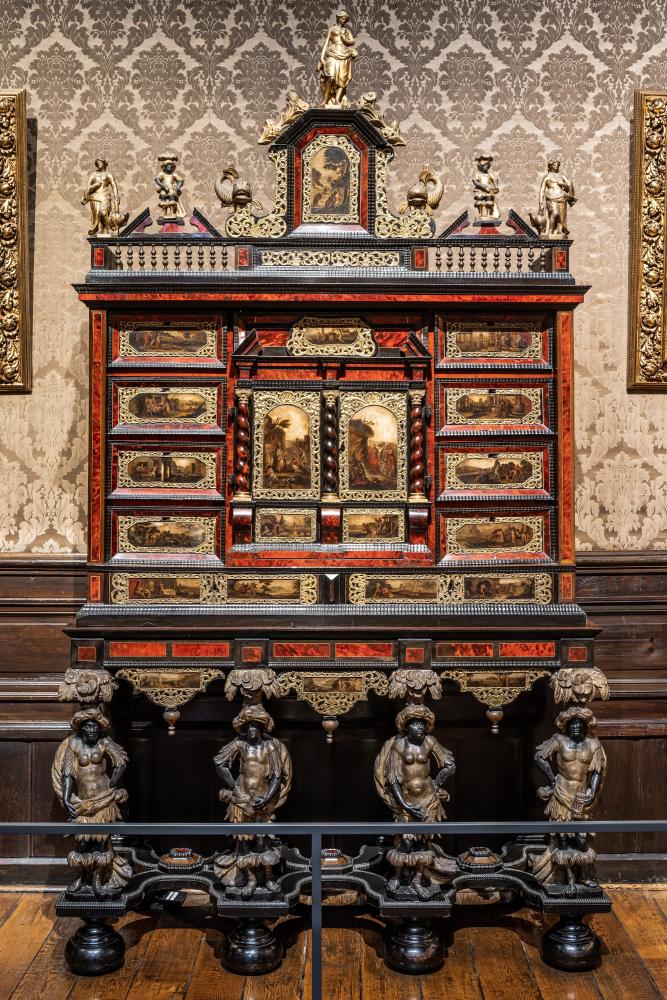
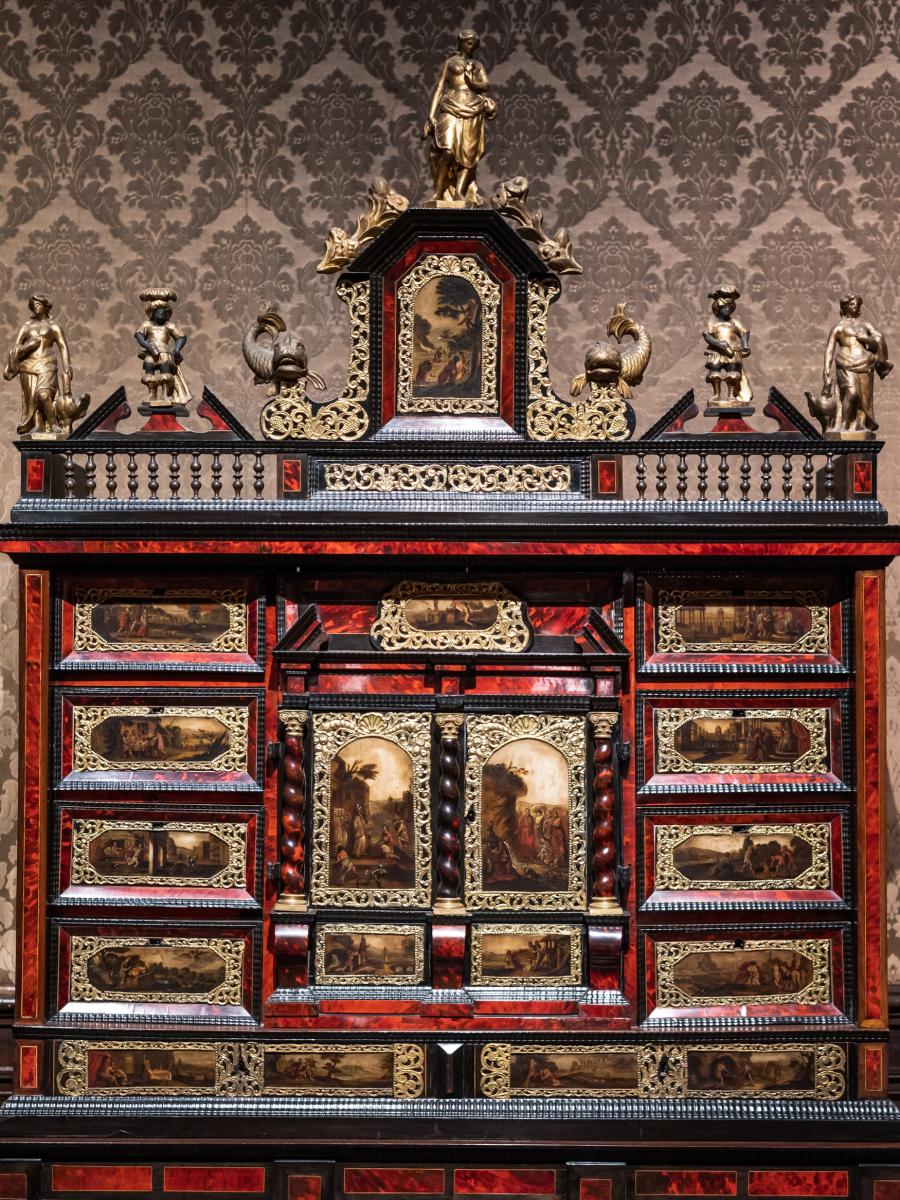
Several furniture pieces are also bound to capture the hearts of art aficionados: the two painted curio cabinets that belong to the original collection, the double instrument by Joannes Josephus Coenen from Roermond, which is one of only four in the world, and both earthenware plates bearing coats of arms and the 17th-century Chinese vase that originated from the royal kilns of the Qing dynasty.
Contact the curator
Who takes care of these treasures?
Highlights
The collection of this historical house and printing office is a true treasure trove. To name a few: