From writer to reader
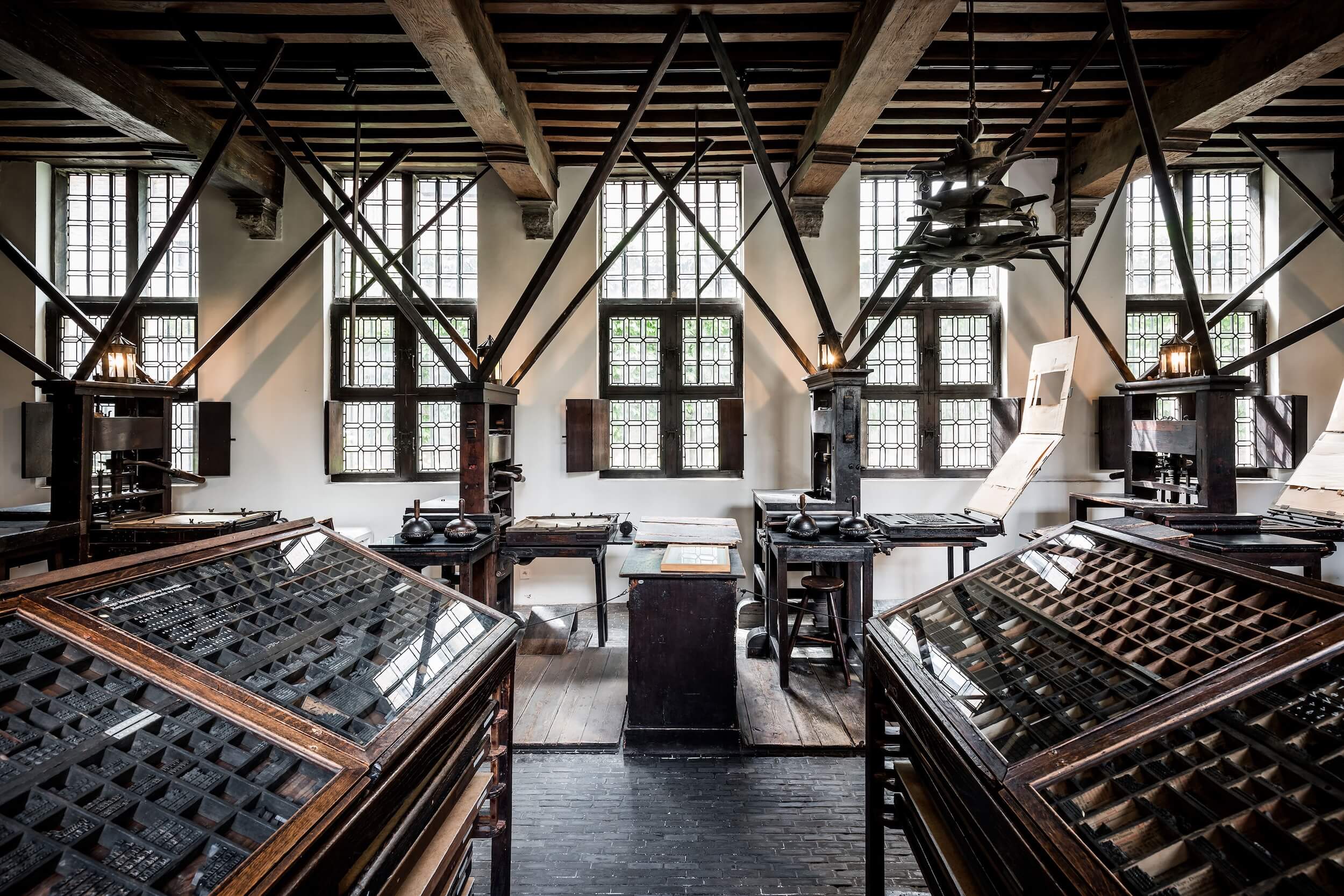
When you pick up a book, many others have already held it in their hands when producing it. In the 16th century, probably even more people were involved in the printing process than today. Around 1574, master printer (the name given to the owner of a printing works) Christophe Plantin employed more than 50 people at his printing works. Each had their own role. In addition to the in-house team of editors, typesetters, printers, inkers, proofreaders and apprentices, the master printer and his successors also relied on external craftsmen and merchants. These included papermakers, bookbinders, publishers, booksellers, engravers, woodcarvers and commercial agents. In short: a well-oiled machine from writer to reader.
If the texts weren't in-house publications, they came from authors, governments or the Church. What did the Plantin printing works ultimately bring to the market? The master printer generally decided that himself. In order to share the costs, he or she sometimes collaborated with other booksellers or authors.
Which dimensions, paper quality, fonts and illustrations? The master printer made all the decisions in close consultation with the editor-in-chief. Based on these choices, an editor prepared the text for printing. He carefully proofread everything, corrected and adapted where necessary, and produced a handwritten copy for the typesetters. The typesetter arranged the text on the page based on this copy.
Next, the inkman dipped his leather pad into ink and rubbed it over the surface of the lead letters. Damp paper was then pinned to a wooden plate (timpanum). That way, it stayed in place. The press was then lowered with a lever, transferring the ink onto the paper.
Collectors bundled all the printed sheets of paper in the correct order, to ensure that no sheet was missing or in the wrong place. As was the case with proofreading, women were also involved in this meticulous task. For example, in 1583, the collector Merten brought his daughter along with him, according to the accounting notes of Martina Plantin.
The Plantin and Moretus family ran their own shops in Antwerp, but their books were mainly distributed through independent booksellers, export and barter trade. At the renowned Frankfurt Book Fair, all the leading names in the publishing world presented their latest publications.
Only after the various authorities had given their official permission could a master printer start up his printing business. And even then, checks and approvals were still mandatory. Any non-compliance risked fines and confiscation.
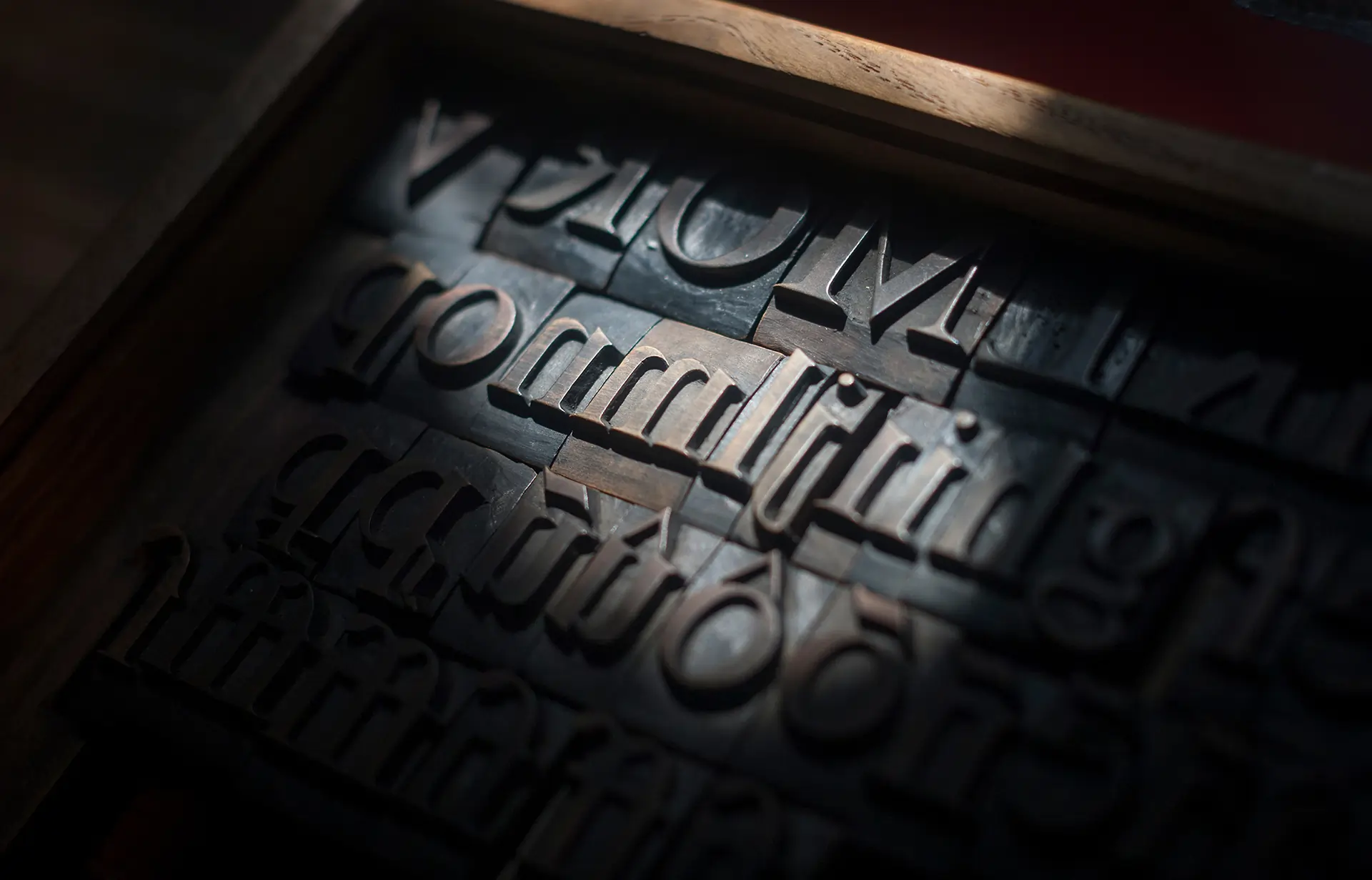
With this printer's copy at hand, the typesetters positioned a line of lead letters on a composing stick. The next line was positioned underneath, and so on until the entire text had been typeset. Finally, the lines were brought together on a wooden galley. The typesetters sometimes adjusted the typesetter's copy, to respect the number of characters available per line and per page. Sometimes they modified the spelling and shortened words. Several pages of text could be printed on a single sheet of paper at the same time. These were therefore merged into a single typeset. A wooden frame held the typeset together and the printer placed it on the press.
Apprentices hung the printed sheets to dry while proofreaders corrected any errors. In the meantime, the press operator and inkmen continued printing. In the worst case, the typeset on the press has to be adjusted. As a result, books sometimes had a variety of texts. Paper was just so expensive.
In the 16th century, books were often sold unbound, as loose quires. But printers such as Plantin also worked with bookbinders to offer ready-made copies with bindings. Buyers could also choose from a range of materials for the cover at the bookbinder's: paper, cardboard, parchment, leather or even fabric.
In the hands of readers, books become unique, personalised objects. People annotated their books, folded corners, changed the order or added names, stamps and inscriptions. Some used them for study, others as a religious symbol or archive. As a result, no two copies of the same edition are the same. No matter how many copies you print, every book is unique. Each with its own purpose, character and appearance.