The collections
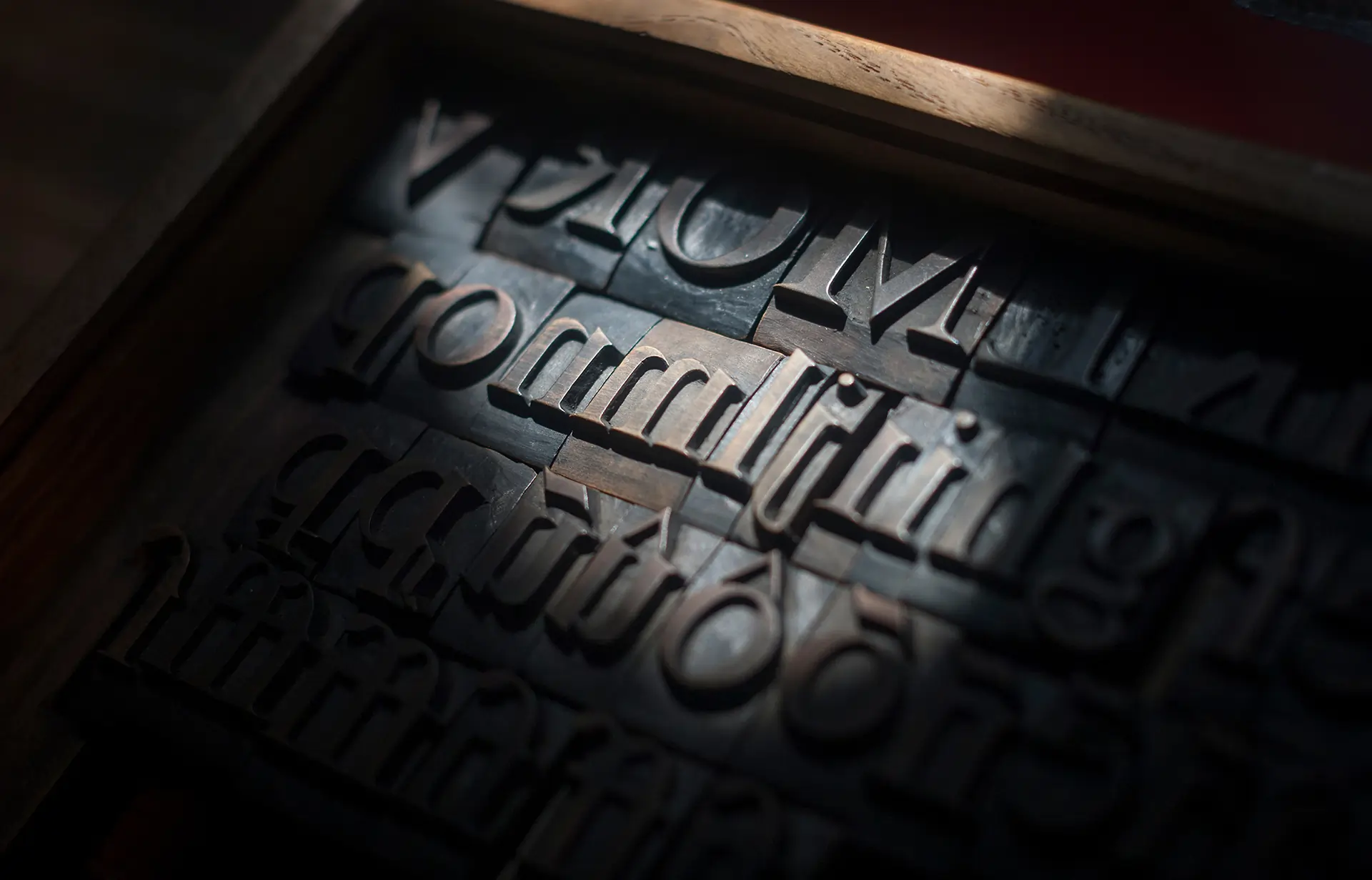
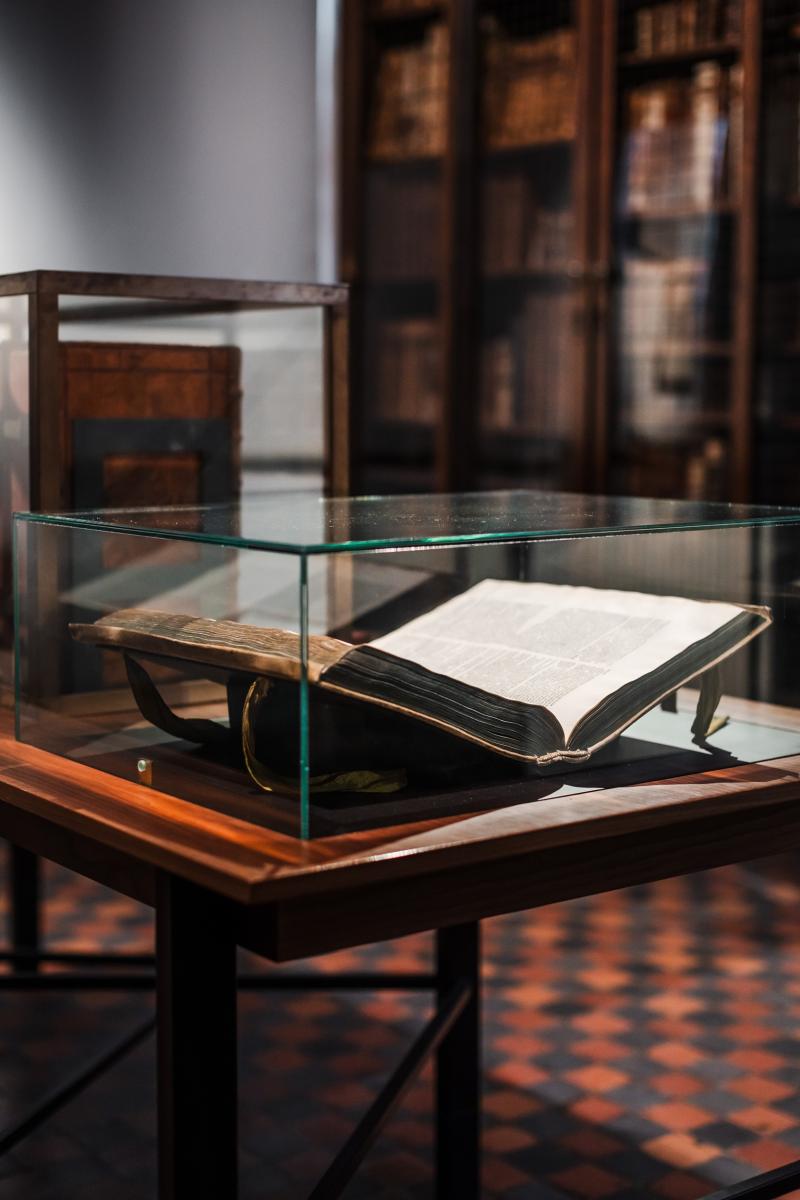
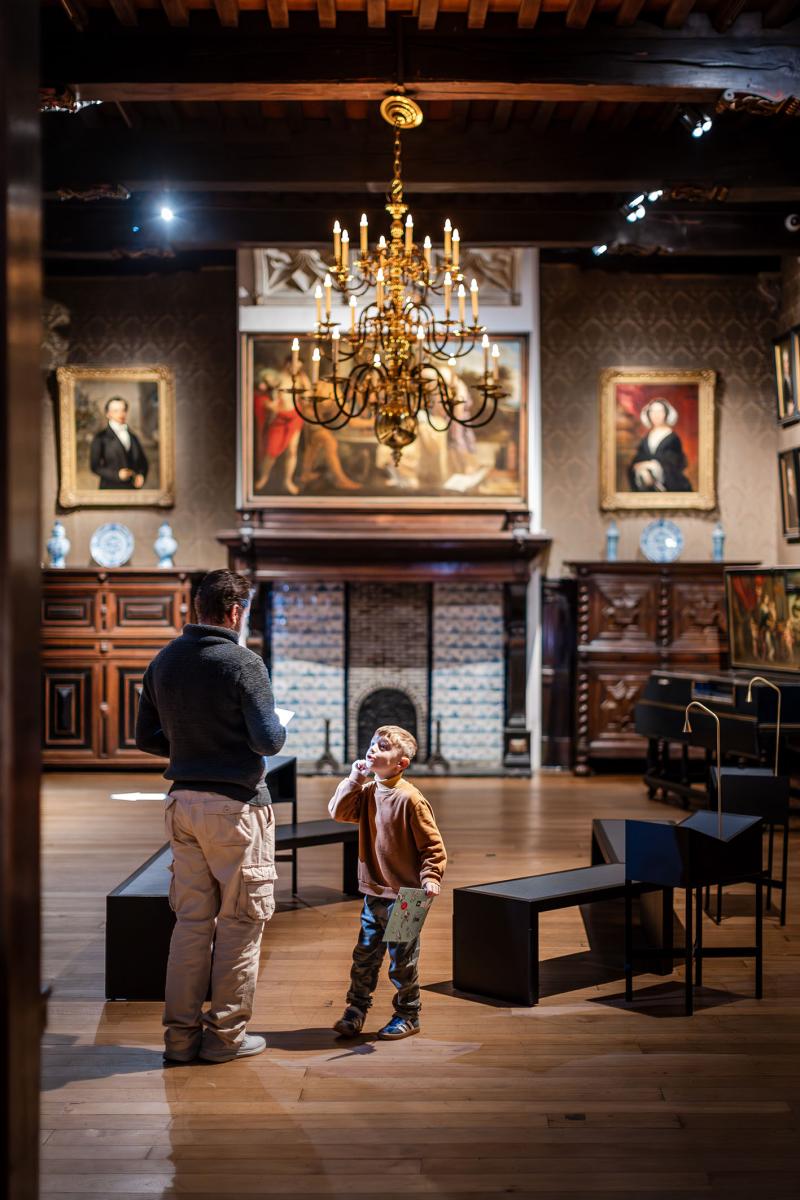
The Museum Plantin-Moretus conserves a multiple collections. Old printed books and manuscripts, printing presses and tools, paintings, prints and drawings, furniture and paintings and several archives.
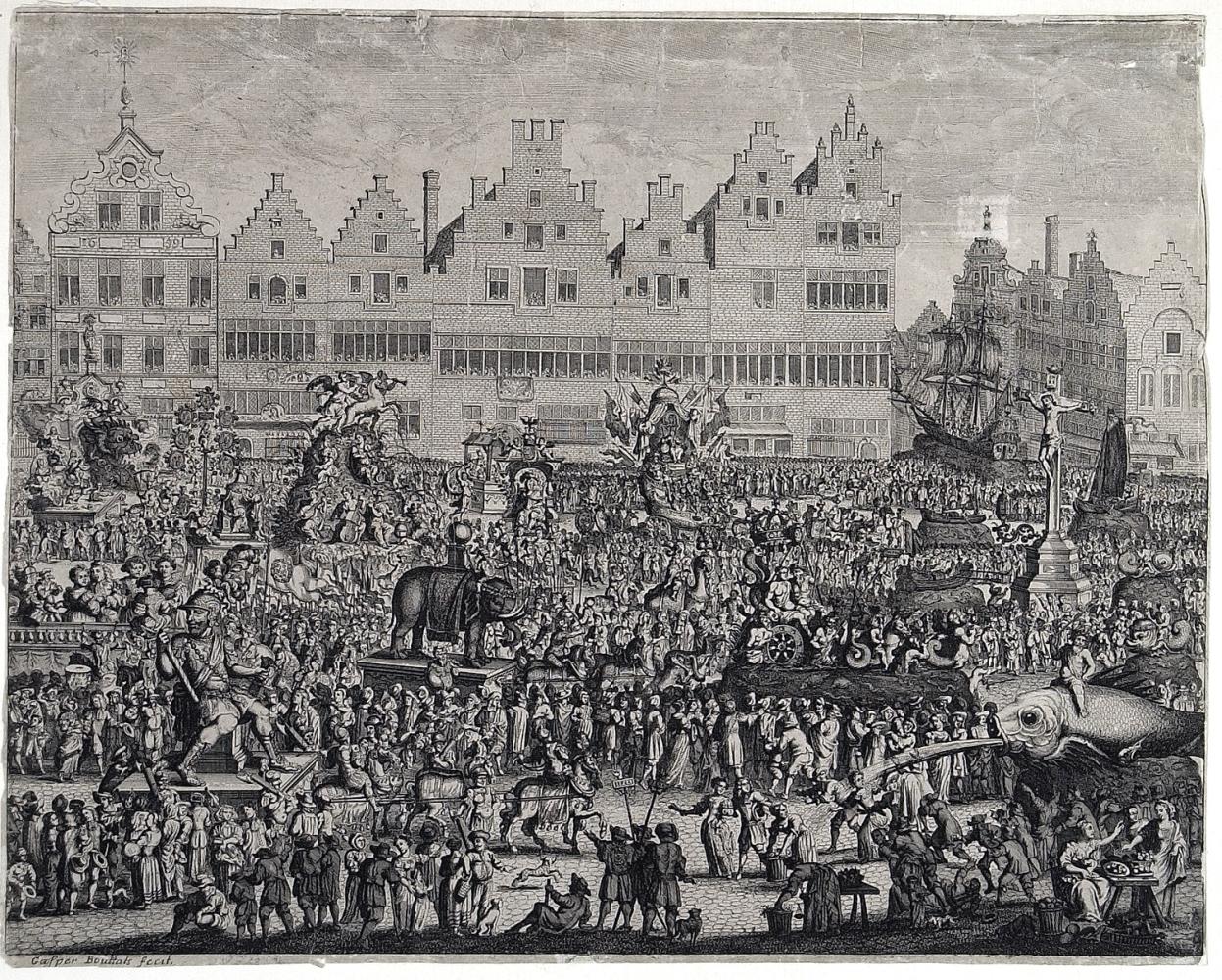
In the 16th and 17th centuries, the streets of Antwerp thronged with parades and processions. On the occasion of the Ommegang pageant in 1685, the Antwerp printer Hieronymus Verdussen the Younger published this print by Gaspar Bouttats together with an accompanying text.
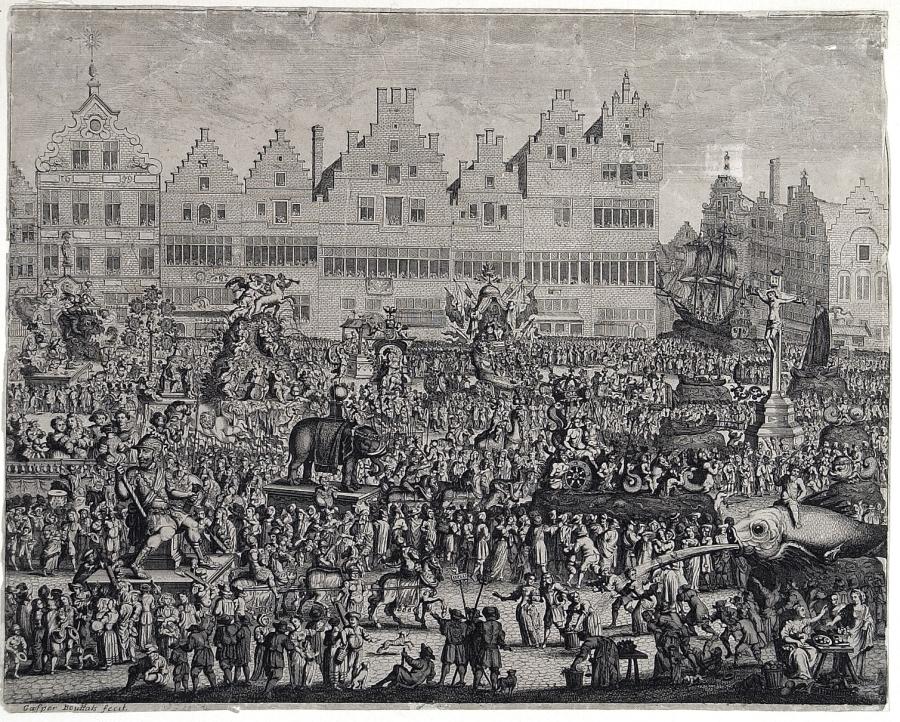
In the sixteenth and seventeenth centuries, numerous parades and processions made their way through the streets of Antwerp. On the occasion of the Ommegang of 1685, the Antwerp printer Hieronymus Verdussen the Younger published this print by Gaspar Bouttats, accompanied by an explanatory text.
The print offers a vivid view of a colourful procession passing the houses on the Meirbrug. Several floats present legendary scenes, with the giant Antigoon standing out in particular. Others draw their inspiration from mythology. In the foreground on the right, a whale splashes water onto a group of spectators. Closer to the centre, an elephant follows the sea chariot of Neptune and Amphitrite.
According to the accompanying commentary, the whale refers to the many dangers that threatened the merchants’ goods at sea. Storms, pirates, and the whale itself are mentioned. The elephant, in turn, serves as a reminder of how fragile peace can be. A message that was particularly relevant in our regions at the end of the seventeenth century.
The text further states that both the whale and the elephant were made from life. One was modelled on a whale “that had been caught in the Scheldt more than a hundred years earlier.” Of the elephant, it is said that it was “made after one that had been in Antwerp more than a hundred years before.” In this way, both floats also evoke the former greatness of the metropolis.