The collections
The Museum Plantin-Moretus conserves a multiple collections. Old printed books and manuscripts, printing presses and tools, paintings, prints and drawings, furniture and paintings and several archives.
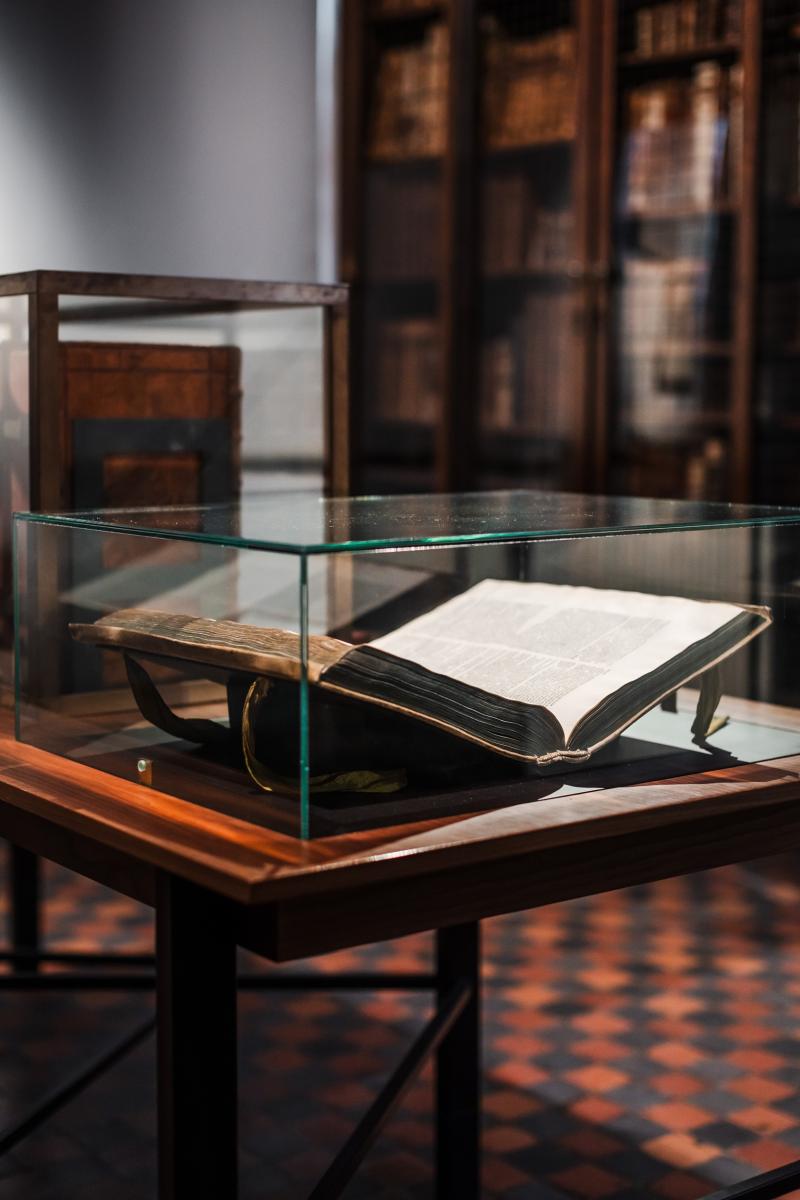
The 36-line Bible is a monument in the history of printing. The Augustinian monastery of Nuremberg donated this copy in 1514 to its new sister institution in Antwerp. When that monastery was closed in 1522 because of Lutheran sympathies, the Bible was put on the market. Nobody knows how it then ended up in Plantin’s library.
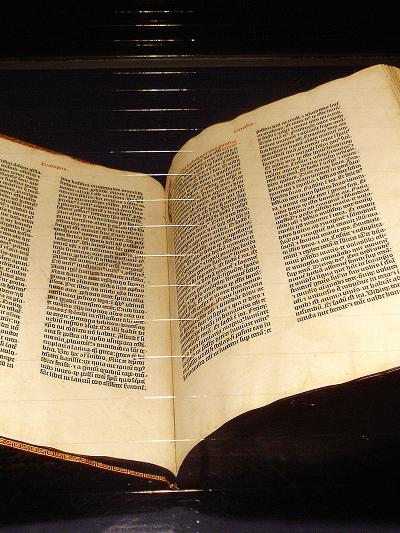
The so-called “36-line Gutenberg Bible”, named after the number of printed lines per column, is the second Bible to be printed in Europe. It is the oldest printed work held by a Belgian institution. Only fourteen copies of the 36-line Bible survive worldwide. As one of the earliest tangible printed books, it is of inestimable value. Printed using the original type material of Johannes Gutenberg, it takes you straight back to the invention of the art of printing.
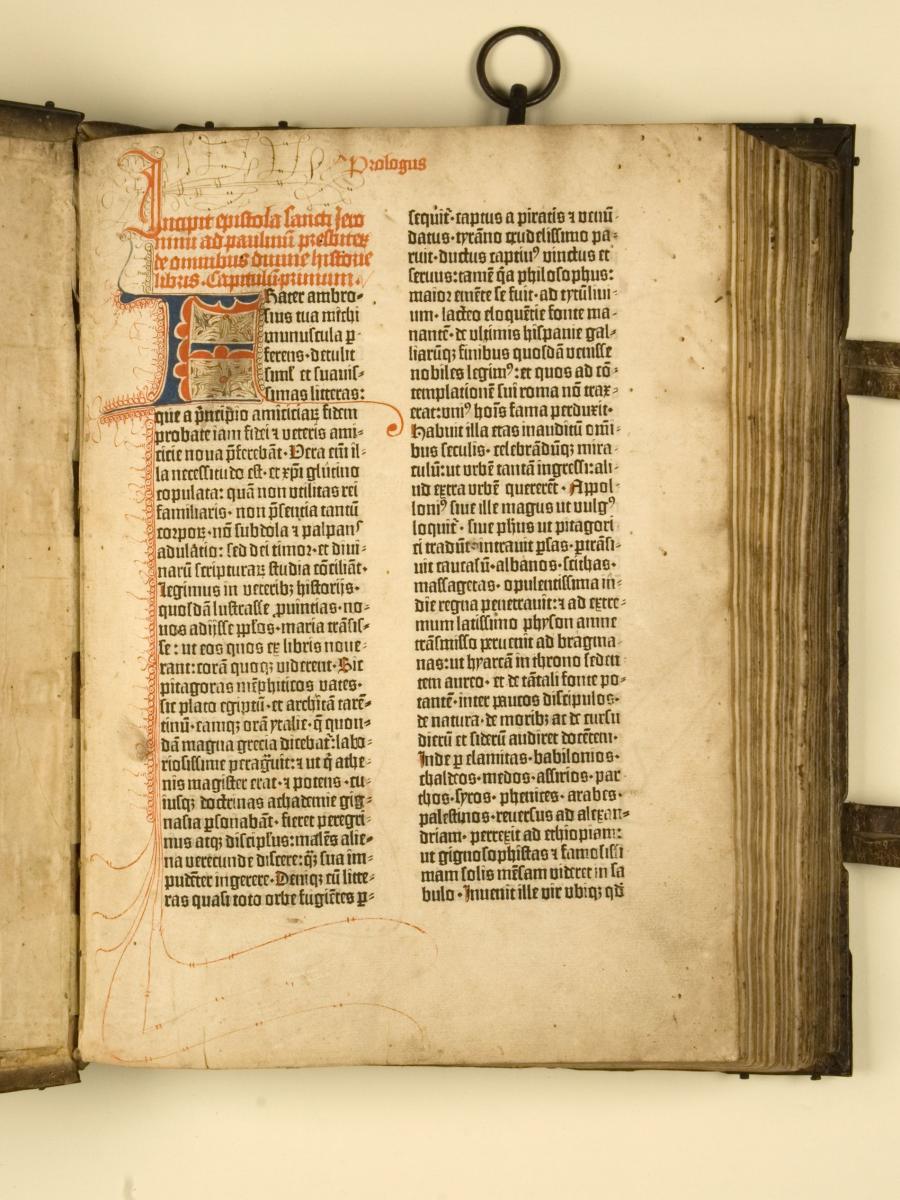
Historians thought for a long time that this edition of 1461 – or even earlier – was the oldest. However, the 42-line Gutenberg Bible has been dated to the years 1452-1455, and is therefore older. Various clues suggest that the 36-line Bible was produced in Bamberg. Albrecht Pfister is often thought to have been the printer, but it seems more likely that other printers printed the Bible with this type from Gutenberg.
The origins of the copy in the Museum Plantin-Moretus are interesting. It was a gift from the Augustinians of Nuremberg to their fellow-monks in Antwerp. These founded a new monastery in 1514, but the Antwerp Augustinians soon faced charges of heresy. In 1522, their monastery was dissolved and their goods were sold publicly. Nobody knows exactly how this work then ended up in Plantin’s library.